

Electronics research · Research insights
Better polishing helps quartz vibrations remain coherent for milliseconds
A 2026 study links long-lived high-frequency vibration to crystal-surface quality. Learn what coherence means and why it differs from clock accuracy.
Quartz is familiar from timing components, but a vibrating crystal can also be a research platform for storing and manipulating mechanical excitations. In that setting, the important question is how long an organised vibration can survive before interacting with its surroundings and losing useful coherence.
Latest breakthrough
A July 2026 Nature Physics paper combines laser spectroscopy with material analysis to investigate phonon decoherence in quartz resonators. The researchers identify surface-related damage, distortion and impurities as major loss sources in their devices. Improved polishing produces quality factors above 240 million at roughly 12 GHz and phonon coherence times exceeding six milliseconds. A possible route beyond 100 milliseconds is proposed, not demonstrated. These results concern specialist high-frequency mechanical resonators under research conditions; they are not a measured accuracy upgrade for an ordinary quartz wristwatch.
Luo and colleagues. Nature Physics (2026). Read the original study.
How the method works
Laser spectroscopy measures the behaviour of the mechanical excitation, while material analysis investigates possible loss sources. The study connects improved surface preparation with higher quality factors and longer phonon coherence. A quality factor describes how weakly an oscillation loses energy relative to its frequency; coherence concerns how well an organised phase relationship persists. These related quantities are not simply the accuracy of a clock. Identifying surface damage and impurities gives the polishing intervention a physical rationale, while the proposed longer coherence time remains a future possibility rather than a measurement.
A simple analogy
A ringing bell loses its clear note when energy leaks away or its motion becomes disturbed. Improving its surface might help preserve a vibration. Quartz phonons at specialist research conditions are not an audible bell, and quantum coherence is more specific than hearing a sound for longer. The analogy introduces loss without equating all forms of persistence.
Energy lifetime and phase both matter
A resonator stores energy by repeatedly exchanging forms of motion and deformation. Damping removes that energy. Random changes in phase can create another problem even when some energy remains. For a quantum memory or precise measurement, preserving an organised state matters more than simply observing that an object still vibrates. This is why coherence and frequency stability should be treated as distinct ideas.
The surface can control the whole device
Our interpretation is that the study makes a persuasive case for treating surface preparation as part of functional design. A very small damaged region may interact repeatedly with an acoustic wave. Improving that region can therefore affect a much larger resonator. The potential benefit is better building blocks for precision sensing and quantum interfaces, rather than an immediate consumer product.
A path to longer-lived mechanical states
To turn a long lifetime into a useful system, engineers must also load, read and couple the state reliably. Performance needs to survive integration with other components. The proposed longer coherence times remain a research direction. A clear reading of the paper separates what was measured from what the authors believe better control might eventually enable. The distinction between a measured signal and the quantity inferred from it also matters in precision hydrogen spectroscopy.
Inspect the crystal's surroundings
The gallery quartz-resonator model exposes a crystal blank, electrodes, feedthroughs, ceramic base and cutaway lid. Notice how a resonator always sits inside a supporting and electrical environment. The model explains those component relationships. It does not reproduce the research microresonator, its acoustic mode or the laboratory setup used to measure the reported coherence.
Related articles
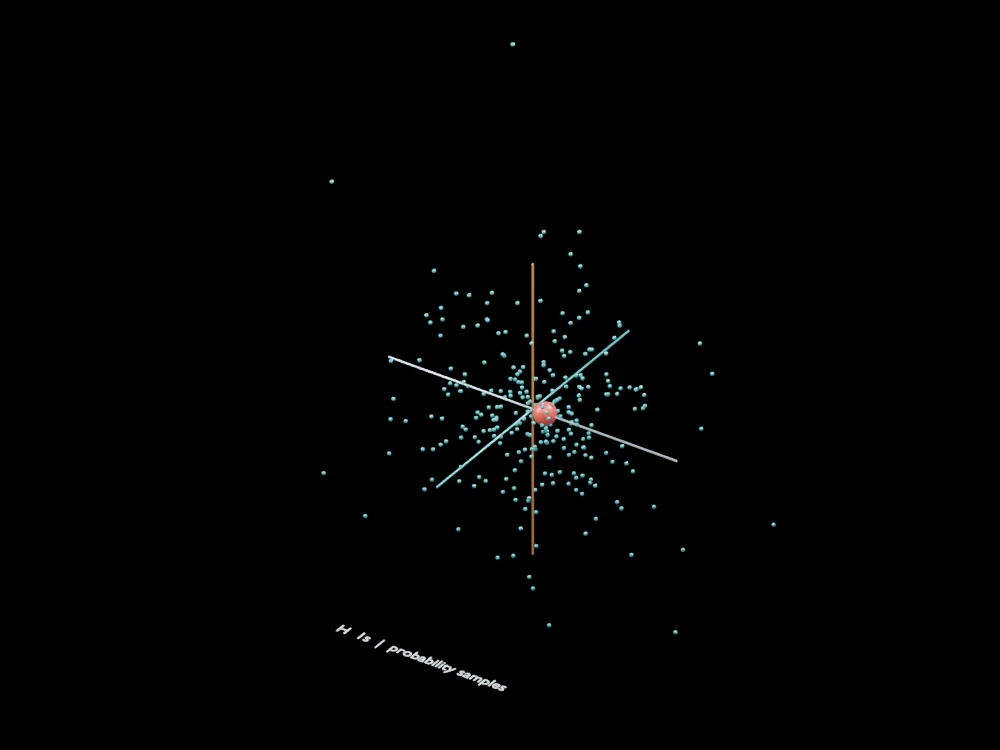 Hydrogen spectroscopy sharpens agreement on the proton's size
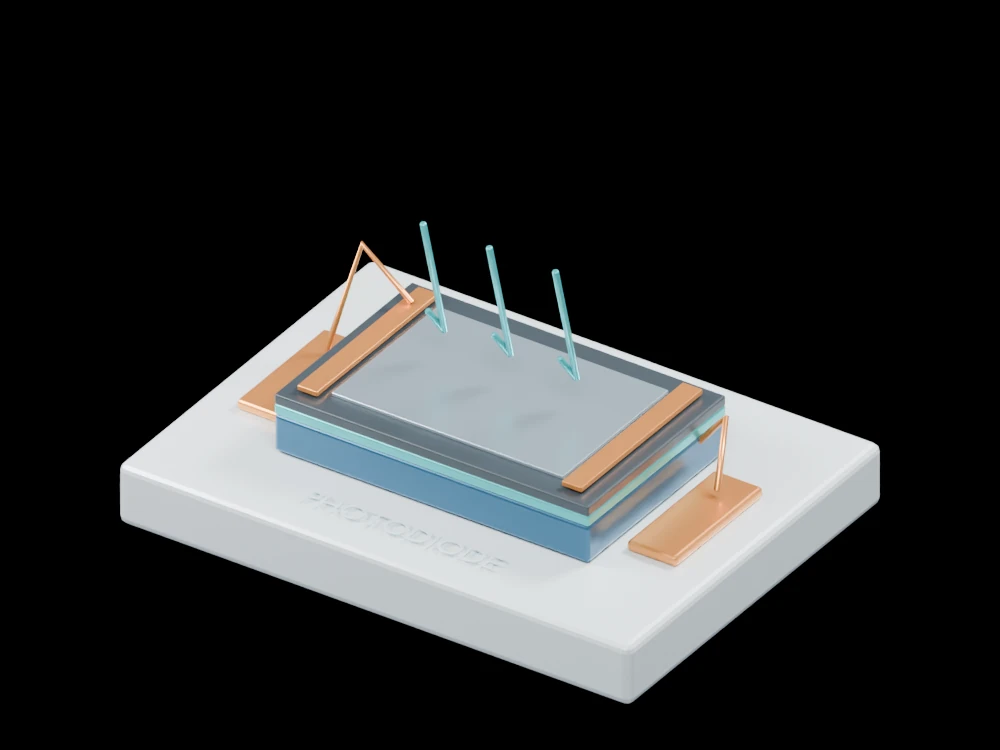 A programmable photodiode brings computation closer to the sensor
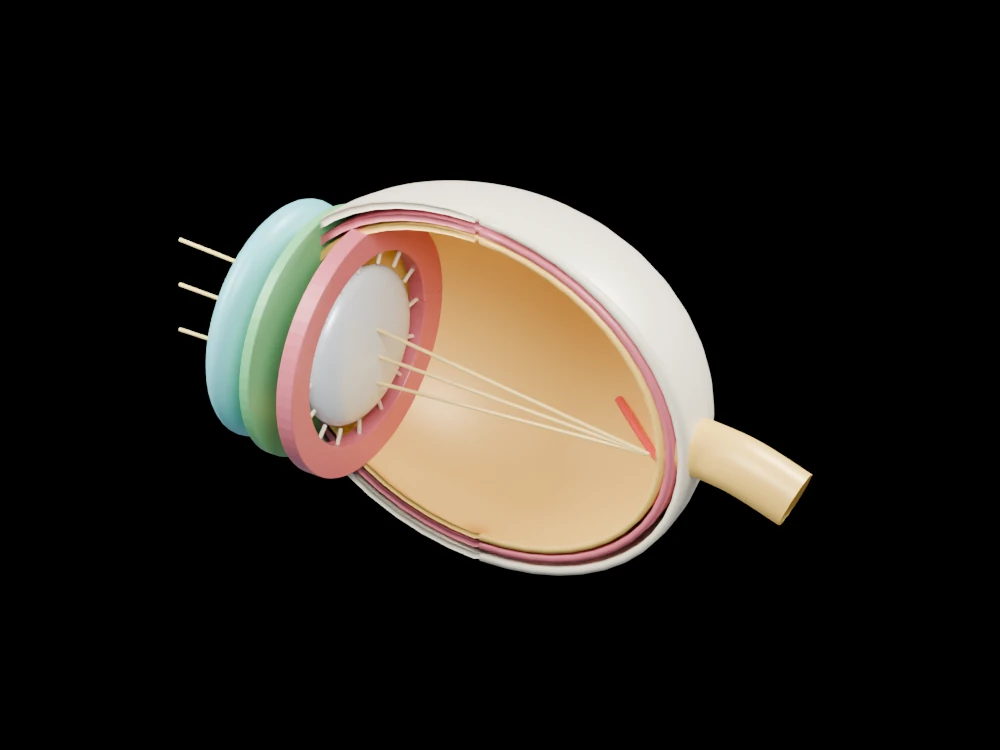 An artificial retina turns near-infrared light into signals in mice
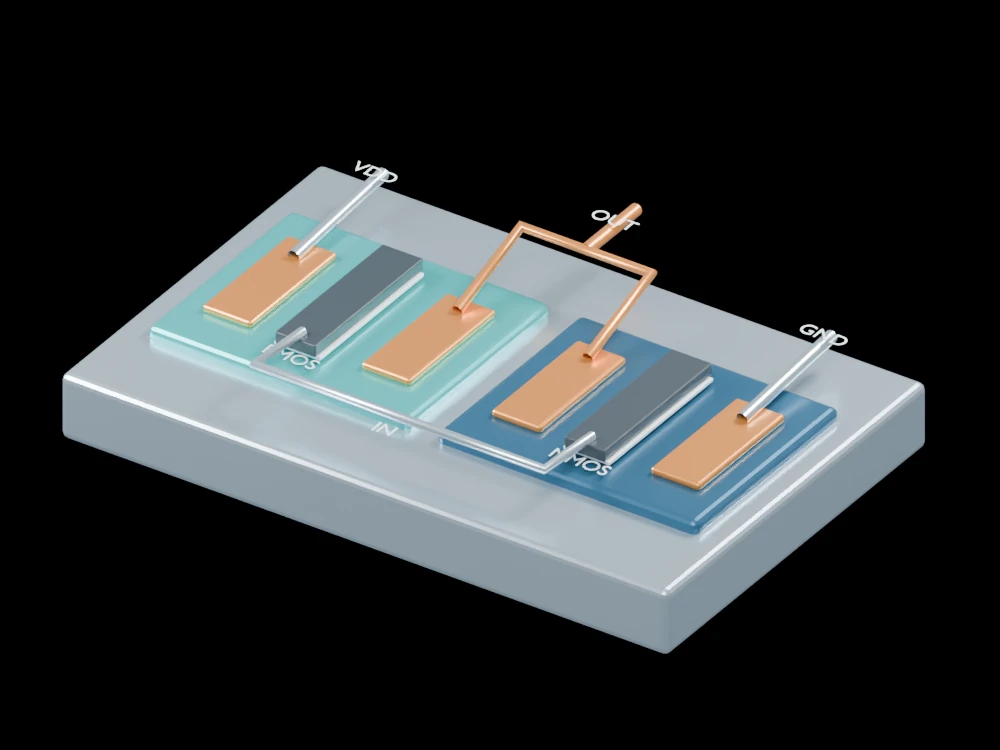 A new gate interface enables 2D inverters with subpicowatt static power
 Circuits stacked below 300°C offer a route to denser chips
 A red micro-LED prototype packs 1,700 pixels into each inch
 Correcting encoder signals improves tiny-motion measurements
Explore the models
Sources and further reading
- Millisecond coherence times in gigahertz-frequency mechanical oscillators Published 9 Jul 2026