

Electronics research · Research insights
A programmable photodiode brings computation closer to the sensor
A programmable photodiode changes the sign and weight of its light response. Explore what in-sensor computation could mean for low-power vision.
A conventional sensing pipeline detects light, converts the signal and then sends data to a processor. Moving some computation into the sensor could reduce the amount of information that needs to travel. The difficult part is making the detector perform a useful, controllable operation without losing its sensing role.
Latest breakthrough
An April 2026 Nature Electronics paper demonstrates a symmetry-reconfigurable photodiode made with silver bismuth sulfide. Electrical programming changes the balance between its two contact barriers, allowing persistent positive and negative photocurrent weights. The authors connect the device to readout electronics and demonstrate infrared imaging as well as eye-image recognition and actuator control. The important result is a detector whose response can participate directly in computation. This is a specific device and system demonstration, rather than evidence that a single photodiode can replace a general-purpose vision processor.
Miao and colleagues. Nature Electronics (2026). Read the original study.
How the method works
The device's two contact barriers influence how illumination produces an electrical response. Electrical programming changes their balance, enabling persistent positive and negative photocurrent weights. A weight specifies how strongly, and with which sign, an input contributes to a computation. Connecting the detector to readout electronics allows the researchers to demonstrate system functions beyond an isolated material measurement. Infrared imaging, recognition and actuator examples establish those particular demonstrations; they do not show that every vision task can be performed within one detector without additional processing.
A simple analogy
Instead of collecting every vote identically and adjusting the totals later, a sensor can give inputs different contributions at the point of collection. That illustrates the idea of computing closer to detection. A photodiode uses physical electrical states rather than deliberate voting rules, and the complete system still needs ways to read and use the result.
What a weighted light response means
A detector usually reports how strongly it is illuminated. If its contribution can be assigned a sign and magnitude, several detectors can contribute differently to a combined calculation. That is useful when a task depends on contrasts or patterns rather than a full raw image. The design question then includes how reliably the programmed response can be stored and read.
Why compute close to the light?
Our interpretation is that the approach could be valuable in systems where transmitting and processing every pixel is expensive. A small robot or wearable sensor might need only a task-specific result. Reducing unnecessary data movement could help, but total energy must include programming, readout and any remaining computation. Measuring the complete system is essential before claiming a practical power advantage.
What remains to be established
Large arrays introduce variation between devices, and real scenes introduce illumination changes. Long-term stability, programming endurance and manufacturing consistency are therefore relevant questions. A successful recognition demonstration does not establish reliability across every user or environment. The paper opens a route to specialised sensing hardware while leaving substantial integration work. A separate example of converting light into a useful electrical response appears in the artificial-retina experiment, which targets neural stimulation rather than general vision processing.
Begin at the optical window
Explore the gallery photodiode's active window, semiconductor junction, bond wires and terminal pads. Follow the route from incoming light to an external electrical connection. This shows the ordinary detector function that the research extends. The model is not a silver-bismuth-sulfide device and does not contain the reconfigurable contact physics or a trained recognition system.
Related articles
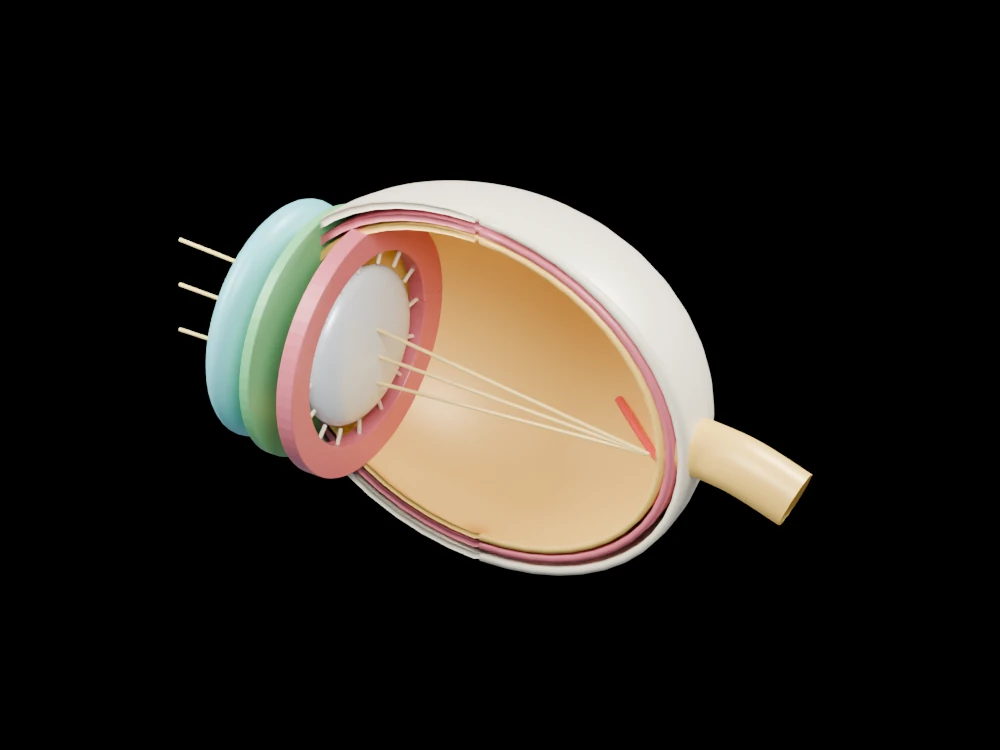 An artificial retina turns near-infrared light into signals in mice
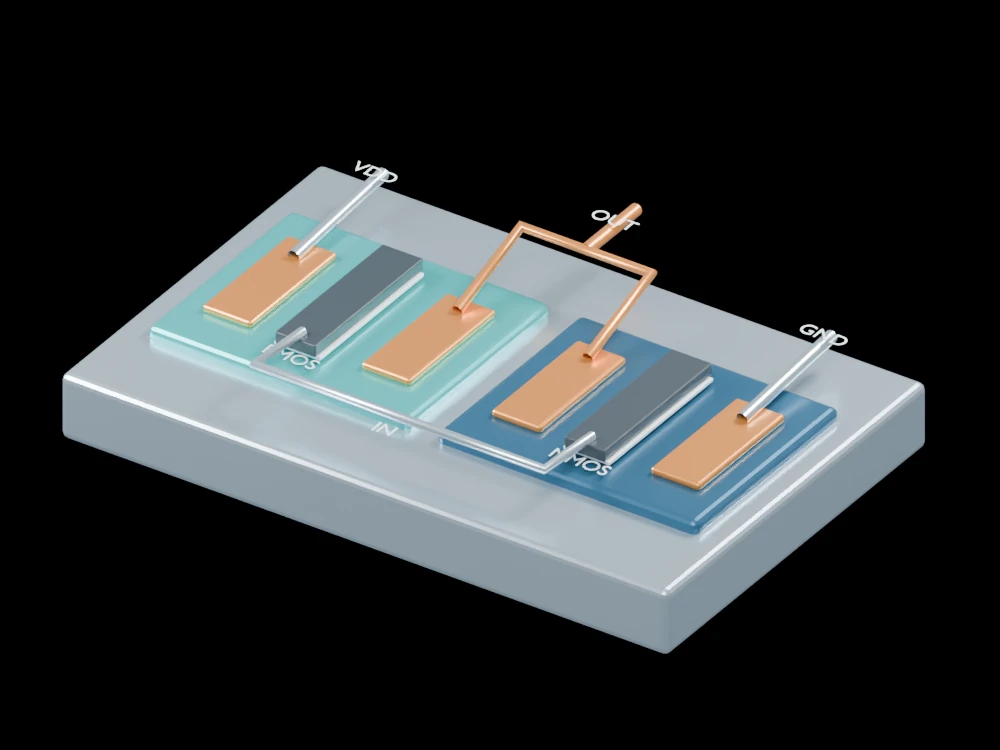 A new gate interface enables 2D inverters with subpicowatt static power
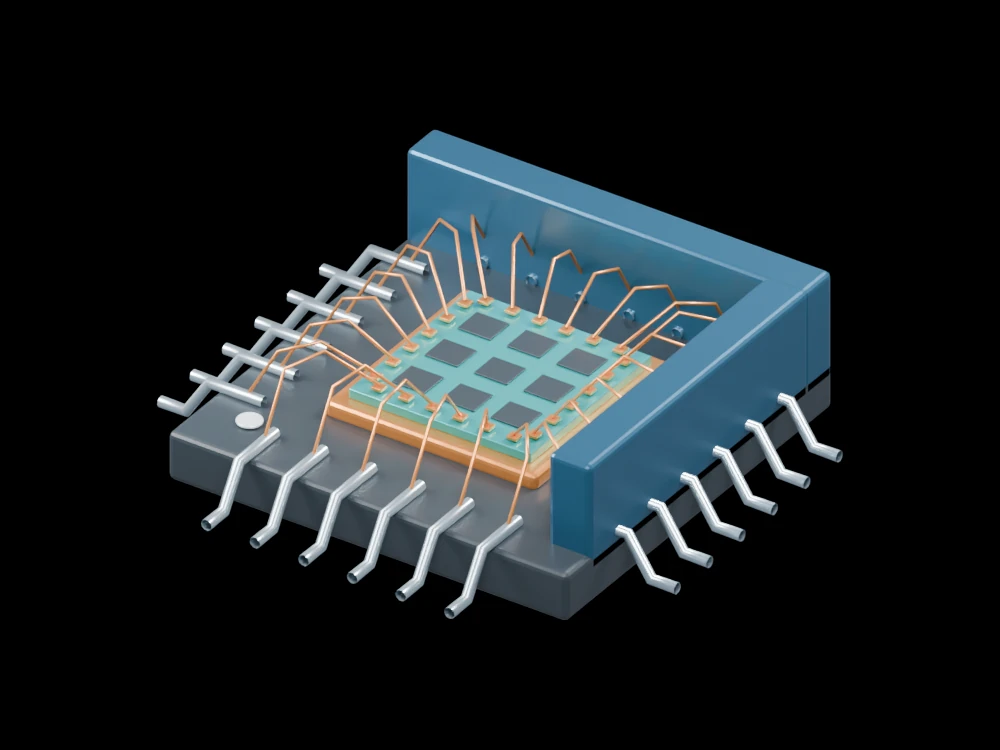 Circuits stacked below 300°C offer a route to denser chips
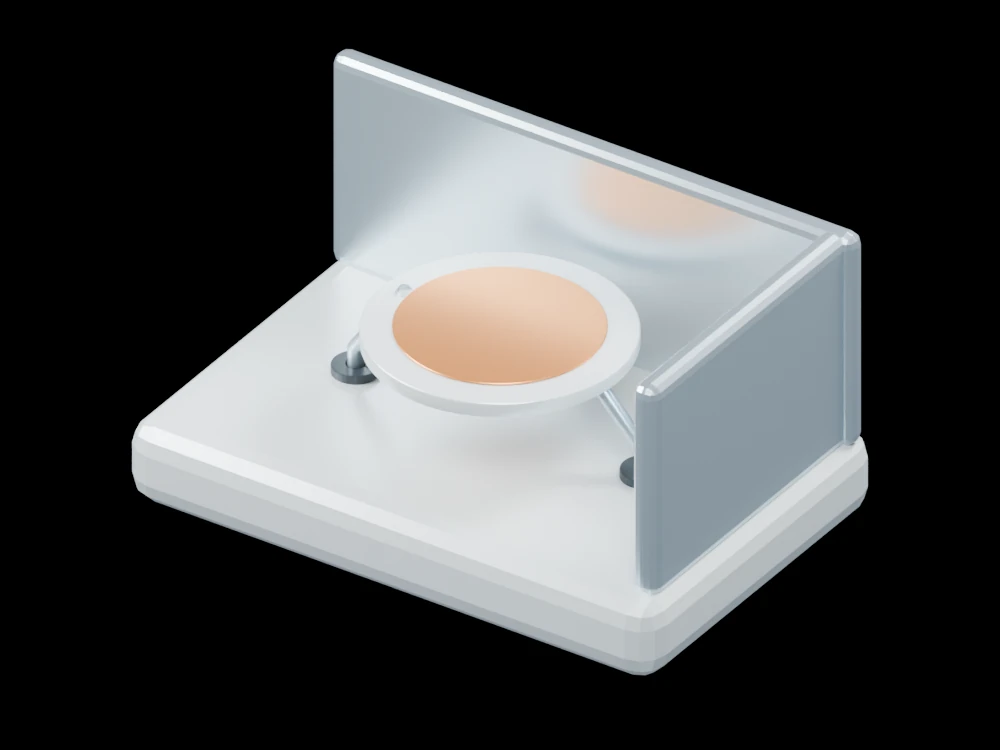 Better polishing helps quartz vibrations remain coherent for milliseconds
 A red micro-LED prototype packs 1,700 pixels into each inch
 Correcting encoder signals improves tiny-motion measurements
Explore the models
Sources and further reading
- A symmetry-reconfigurable photodiode for sensing and computing Published 30 Apr 2026