

Civil research · Research insights
A damaged bridge truss reveals how forces find another route
Twelve damage scenarios reveal how a steel truss finds alternative load paths. Explore what robustness means beyond an undamaged strength calculation.
A truss bridge is a network of connected members. Its behaviour after damage depends on whether that network can redirect force when one route becomes weaker. This makes robustness a different question from whether every member is strong enough under an ordinary, undamaged load case.
Latest breakthrough
A February 2026 Journal of Bridge Engineering paper experimentally examines a steel Pratt-type truss under twelve damage scenarios and two loading positions. The researchers track changes in stiffness, deflection and member strain. Damage to chord members near mid-span and to selected vertical or diagonal members near quarter-span was particularly consequential in the tested arrangement. Changes in strain, including switches between tension and compression, revealed alternative load paths. The contribution is physical evidence about how a damaged truss redistributes force, rather than an assessment based only on its intact configuration.
Acharya and colleagues. Journal of Bridge Engineering (2026). Read the original study.
How the method works
The researchers deliberately examined twelve damage scenarios and two load positions on a steel Pratt-type truss. Recording deflection, stiffness and member strain provides several views of the response. Deflection describes movement; stiffness relates force to movement; strain describes local deformation. A change from tensile to compressive strain can indicate that a member's role has changed as forces redistribute. The experiment therefore assesses the damaged configuration rather than inferring its behaviour only from an intact structure. The geometry and selected scenarios limit how directly the result transfers to another bridge.
A simple analogy
If one person stops helping to carry a long object, the remaining people may take different shares of the load. A truss also redistributes force when a member is damaged. Steel members cannot consciously adjust, and connections, buckling and geometry constrain the possible routes. The analogy explains redistribution, not a guarantee that alternative support will be adequate.
Why a triangle is not the whole explanation
Triangulation gives a truss its familiar structural organisation, but the forces depend on the complete connected system and its supports. Removing or weakening one member changes how the surrounding network deforms. A member that was lightly loaded before damage can become important afterwards. Connections and the deck can also affect which alternative routes are available.
What inspection programmes could learn
Our interpretation is that damage scenarios help connect inspection findings with structural consequences. Instead of treating every visible defect as equally important, engineers can examine whether it threatens a critical force route or a useful reserve path. That reasoning could support better prioritisation of detailed assessment. It does not eliminate the need to evaluate the actual bridge and its current condition.
A test configuration is not every bridge
The paper's findings depend on geometry, connection behaviour, load position and the imposed damage. Corrosion, fatigue cracks and accidental impact can produce different conditions. The study does not certify any existing bridge or supply a universal rule for allowing traffic after damage. Its strength is the controlled comparison of multiple scenarios and the measurements used to interpret them. The need to examine a structure after a component fails also motivates research on self-centering building frames.
Trace several routes through the model
In the gallery bridge, follow the side-truss chords, diagonals and verticals, then examine the cross girders, deck and bearings. Try to identify more than one route from a loaded deck location to an abutment. The exercise explains the idea of load redistribution. The model is a teaching structure and contains no bridge-specific inspection record, material certification or validated damaged-state analysis.
Related articles
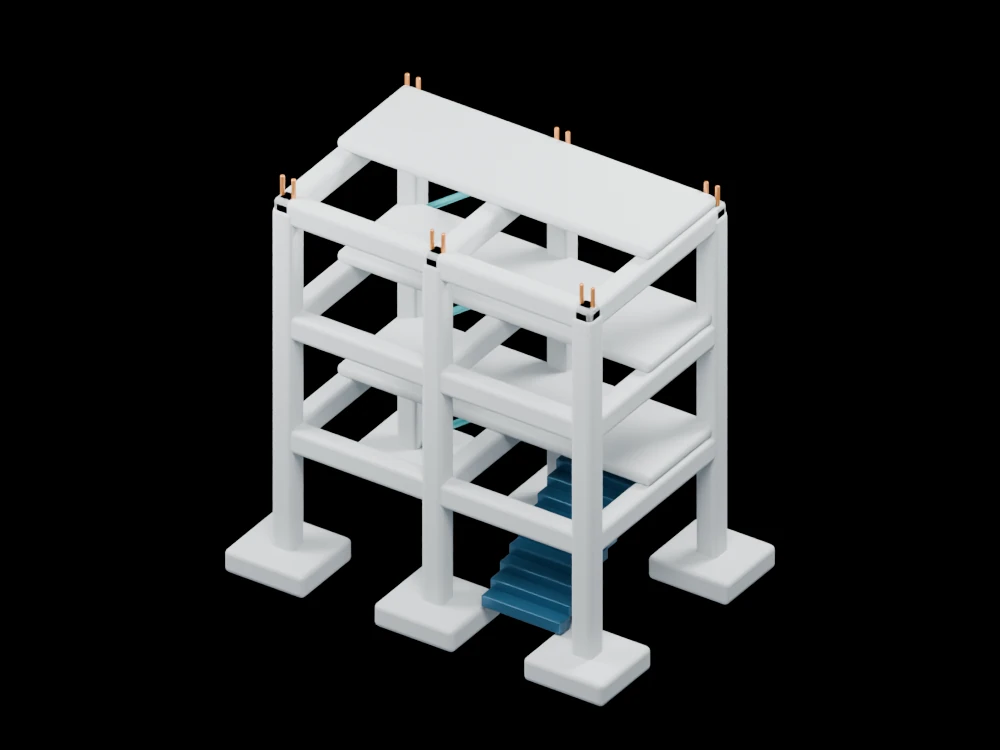 What happens when a self-centering frame loses a steel strand?
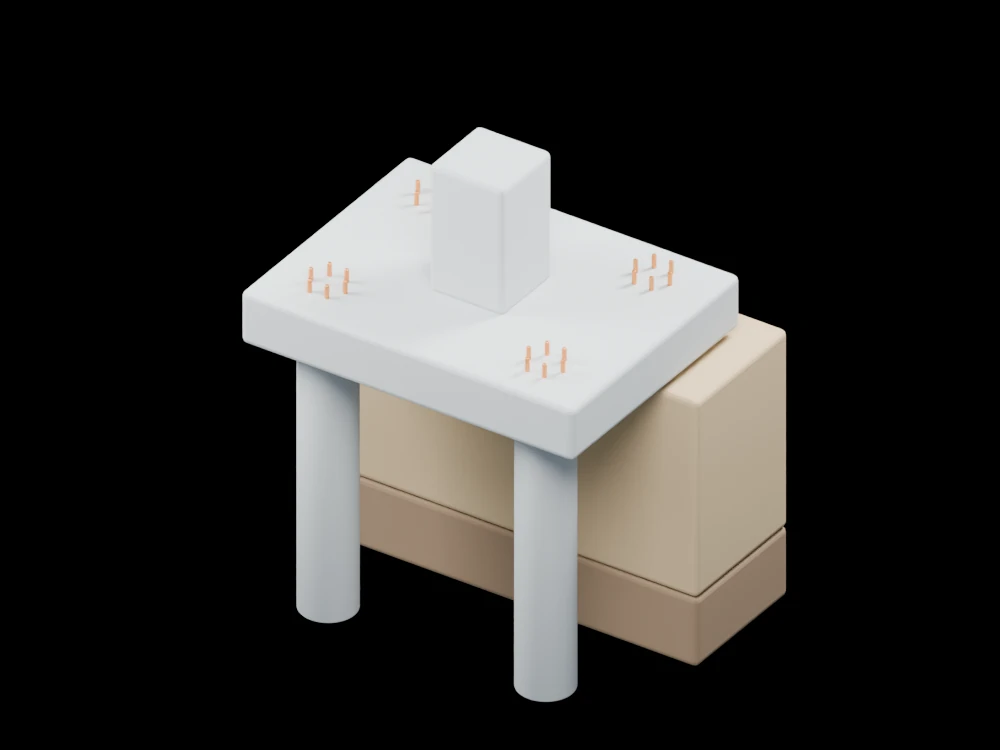 A water-tank study captures scour and pile movement together
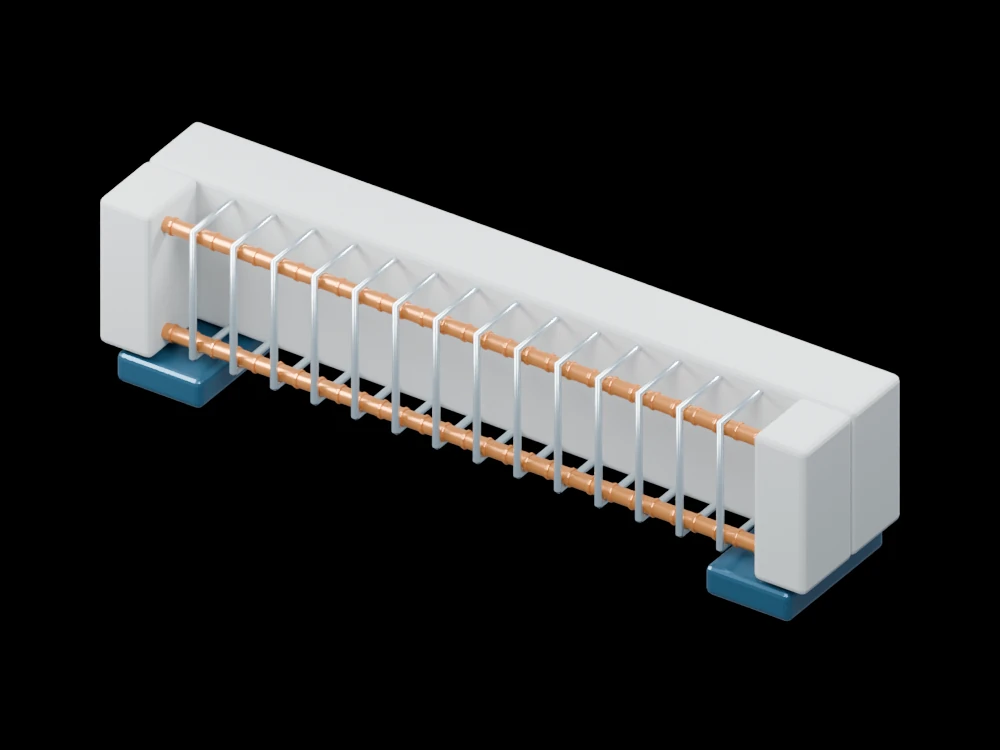 Shape-memory metal closes cracks in experimental concrete beams
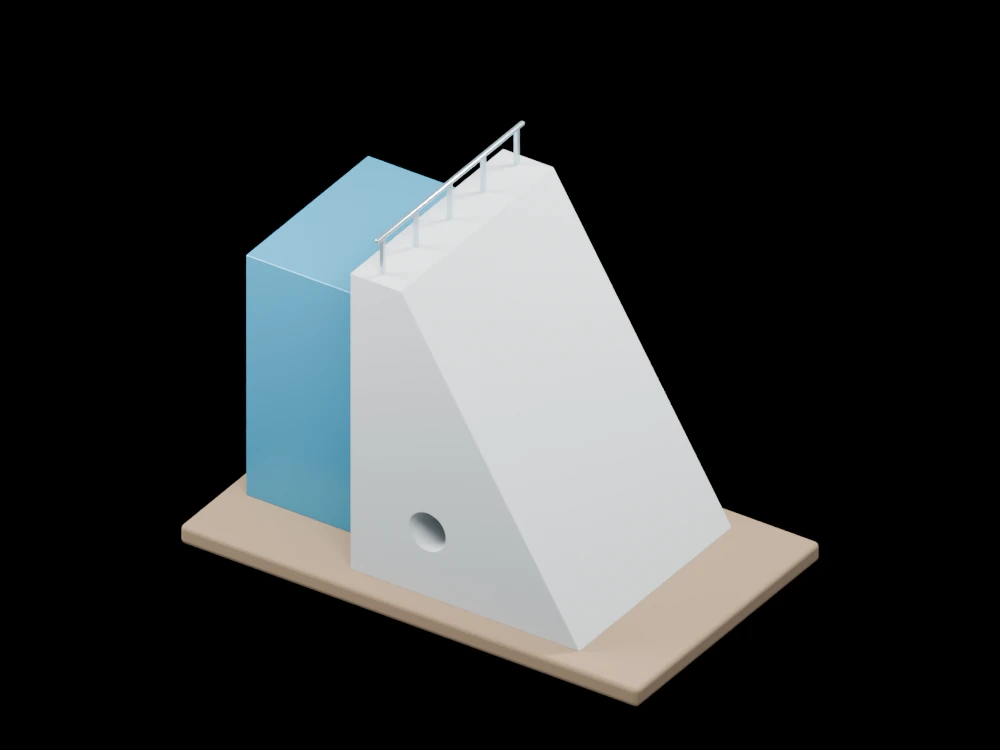 A laboratory dam model shows how drain placement changes uplift
 A seismic model brings soil continuity into retaining-wall analysis