

Civil research · Research insights
A water-tank study captures scour and pile movement together
A coupled water-tank experiment follows erosion and lateral loading together. Discover why removing soil from a static model can miss important behaviour.
A pile does not support a structure alone; the surrounding soil is part of the system. In water, that soil can be eroded while waves or other forces repeatedly push the foundation sideways. Assessing erosion first and loading later may miss how the two processes influence one another.
Latest breakthrough
A 2026 Soil Dynamics and Earthquake Engineering paper examines a high-pile-cap foundation using water-tank experiments that combine scouring with horizontal cyclic loading. The researchers follow the evolving erosion shape and foundation response during the same process. Their analysis tracks changes in pile bending behaviour and the interaction between soil removal and cyclic movement. The methodological advance is this coupled observation, which goes beyond representing scour only as a fixed loss of soil cover. Its findings apply to the study's sandy-soil and foundation conditions.
Duan and colleagues. Soil Dynamics and Earthquake Engineering (2026). Read the original study.
How the method works
Water-tank experiments combined erosion around a high-pile-cap foundation with horizontal cyclic loading. Observing both during the same evolving process matters because movement can interact with changing soil support. The investigation follows scour geometry and pile response rather than replacing the eroded soil with one fixed, final excavation shape. Pile bending describes how the member curves under load; it can change as surrounding support changes. Sandy-soil conditions and the tested loading arrangement define the evidence, so other soils and hydrodynamic settings require their own assessment.
A simple analogy
A post supported by sand may respond differently if the sand is being removed while the post is repeatedly pushed. Testing only after all the sand has gone misses the sequence of changing support. Real foundation scour involves fluid flow and soil mechanics, so the illustration explains the coupled experiment rather than reproducing its scale or forces.
The boundary conditions move
Soil near a pile provides lateral resistance. As material is removed, the unsupported portion and the distribution of restraint change. At the same time, repeated pile movement can disturb the surrounding soil. This makes the problem time-dependent: two foundations with the same final scour depth may have reached it through different loading histories and may not respond identically.
Why this matters for infrastructure near water
Our interpretation is that coupled tests can improve the questions asked during foundation assessment. Engineers may need to consider the rate and sequence of change alongside a final erosion profile. That could inform monitoring strategies for bridges, waterfront structures and offshore foundations. The benefit would come from recognising developing changes earlier and validating models against more representative physical evidence.
Scaling remains an engineering challenge
A laboratory tank cannot reproduce every feature of a real seabed, river or flood. Soil grading, layering, drainage and loading direction can alter the response. Translating a model test into design values requires careful treatment of scale and site conditions. The article reports an experimental approach, not a universal allowable scour depth or a foundation design recommendation. Its evolving soil conditions provide a useful contrast with the explicit foundation assumptions in retaining-wall modelling.
Look below the pile cap
The gallery foundation exposes four piles, the reinforced cap, a column starter and surrounding soil layers. Compare the connected concrete structure with the soil that restrains it. This makes the coupled-system idea easier to see. The model is not the paper's test specimen and does not simulate erosion, cyclic soil response or a particular site's bearing capacity.
Related articles
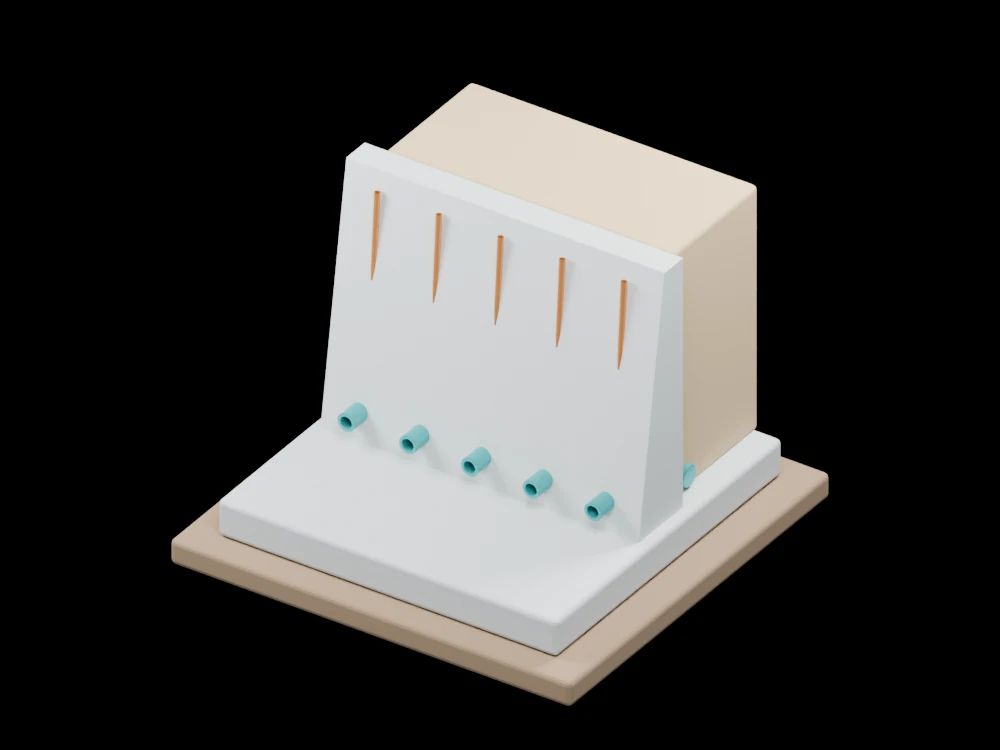 A seismic model brings soil continuity into retaining-wall analysis
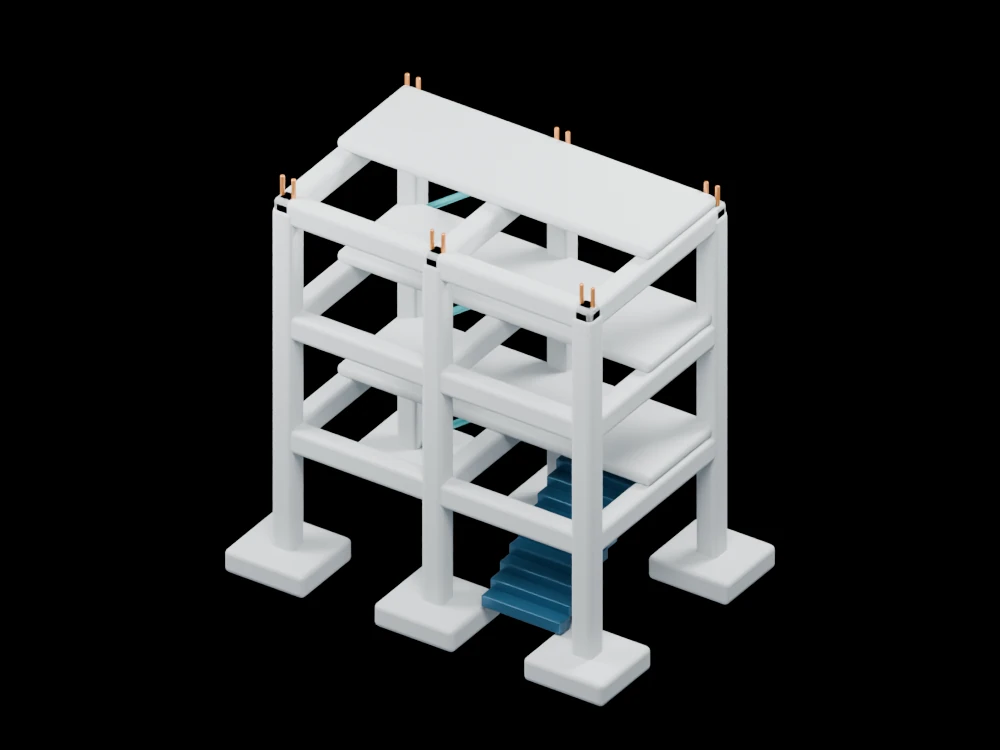 What happens when a self-centering frame loses a steel strand?
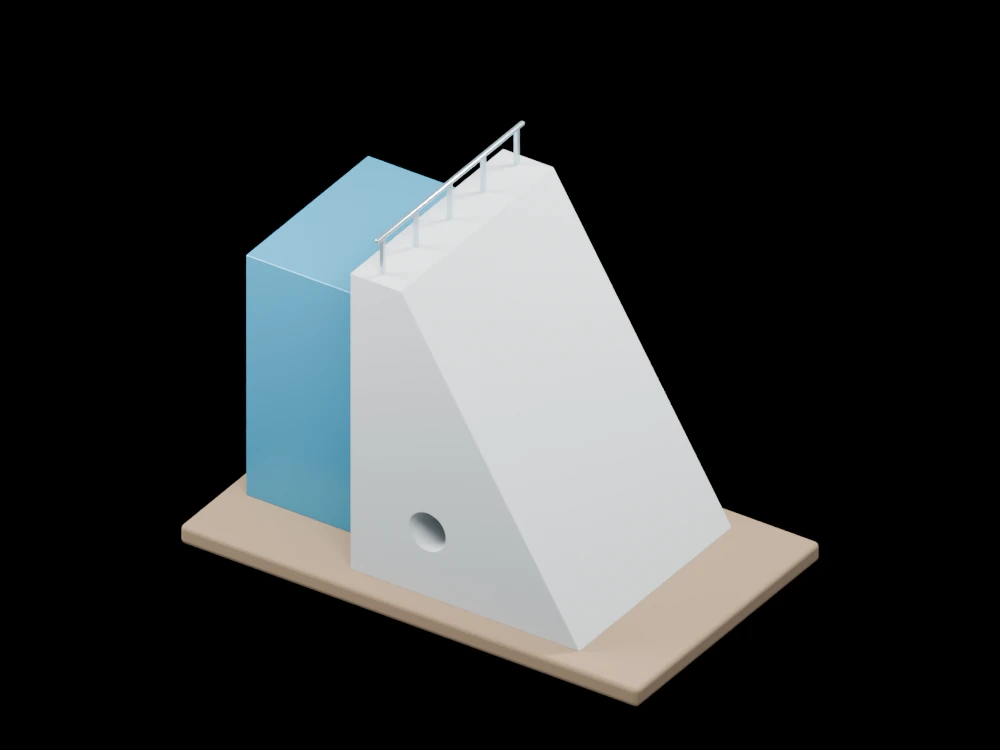 A laboratory dam model shows how drain placement changes uplift
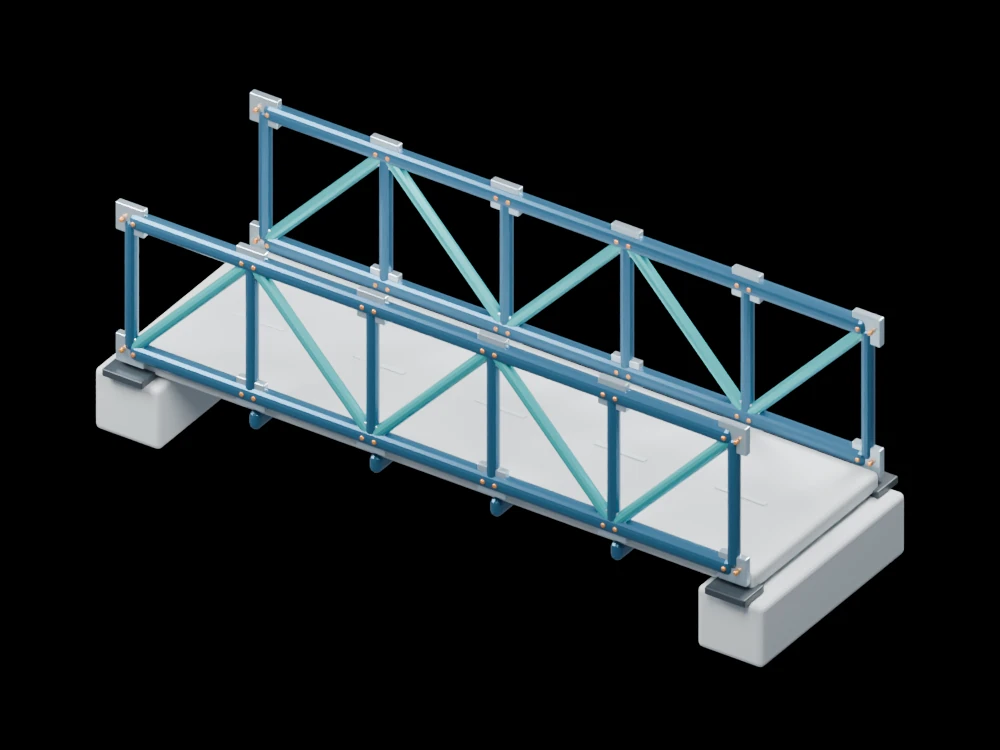 A damaged bridge truss reveals how forces find another route
 Shape-memory metal closes cracks in experimental concrete beams