

Biological research · Research insights
AI maps 36 million cells into a shared biological reference
Universal Cell Embedding organises molecular cell data across tissues and species. Explore what a cell foundation model represents and what it cannot simulate.
Two cells can contain the same broad set of organelles and still behave very differently. Their molecular activity, developmental history and environment help determine their roles. Modern cell atlases capture some of that diversity, but comparing measurements across experiments and species remains difficult.
Latest breakthrough
A July 2026 Nature paper presents Universal Cell Embedding, a foundation model that represents single-cell molecular data in a shared mathematical space. The researchers use it to organise an atlas of thirty-six million cells spanning more than a thousand named cell types and eight species. They report useful representations of new cells without task-specific retraining or labelling. This is an advance in analysing and comparing cell data. An embedding is not a complete living-cell simulation: it does not reproduce every chemical reaction, organelle interaction or future response of an individual cell.
Rosen and colleagues. Nature (2026). Read the original study.
How the method works
An embedding represents complex measurements as coordinates in a mathematical space. Universal Cell Embedding applies that idea to single-cell molecular data so that relationships can be compared across datasets and species. The atlas and the evaluation on new cells test whether that representation retains useful biological information beyond a narrowly fitted task. Cells that appear close in such a representation share selected data patterns; proximity is not proof that their full behaviour is identical. Evaluation must distinguish a helpful organisation of observations from causal knowledge of how a cell works.
A simple analogy
A library map groups books by useful similarities so that a reader can find related material without reading every page first. A cell embedding provides a comparable organisational aid. The map is not the books themselves: coordinates cannot stand in for every reaction, organelle or future change in a living cell.
What a shared representation does
Imagine comparing two collections in which the measurements are not immediately easy to align. A representation seeks a useful common description while retaining meaningful differences. For cells, that can help organise similarities in molecular state. The challenge is to preserve biological variation without turning differences caused by measurement conditions into apparent biological discoveries.
Why researchers could benefit
Our interpretation is that a consistent representation could make existing cell datasets more reusable. It may help researchers formulate questions about related cell states and decide where closer experimental investigation is needed. The potential societal benefit comes through better research tools and more effective use of costly datasets. A useful map can guide discovery, but it cannot replace the experiment that tests an explanation.
A map does not establish a cause
Nearby points in a learned space need not prove a shared causal mechanism. The available training data and evaluation tasks also influence which relationships are reliable. Clinical interpretation requires separate validation. The paper should be read as a foundation for analysis and hypothesis generation, rather than a diagnostic system or a universal predictor of cell behaviour. A related but distinct effort, Evo 2's learning from long DNA sequences, works with sequence context rather than treating a cell embedding as a complete simulation.
Connect molecular data with physical organisation
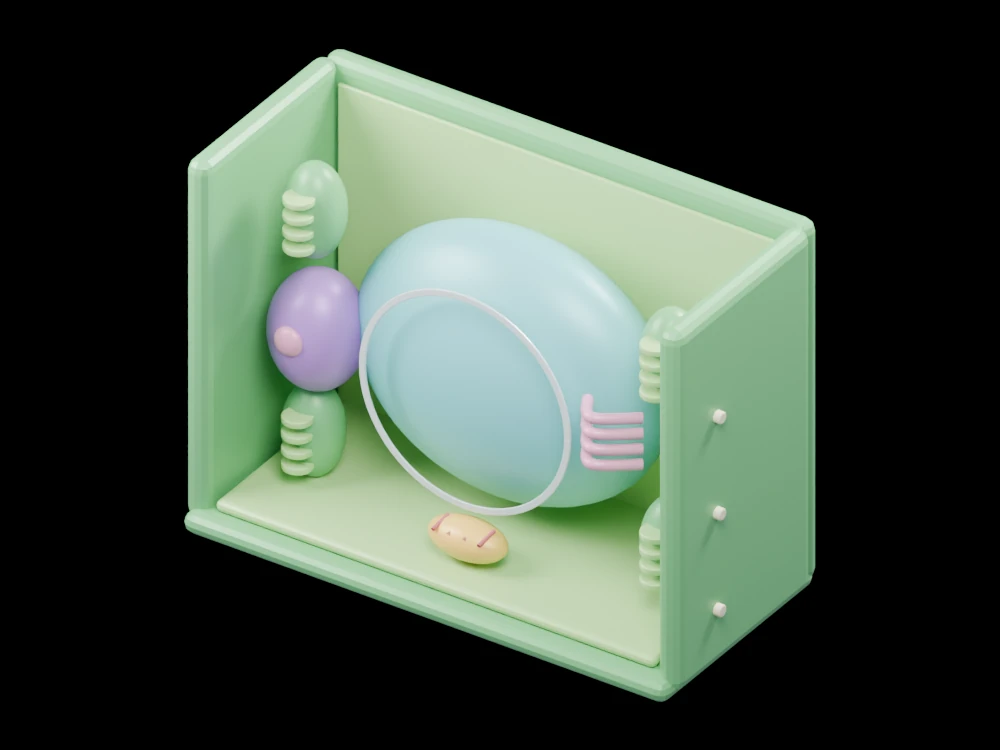
Open the animal-cell cutaway and locate the nucleus, endoplasmic reticulum, Golgi stacks and mitochondria. These structures provide spatial context for the many activities reflected indirectly in molecular measurements. The model is a general teaching cell, not one of the paper's measured cells. Its geometry and the study's mathematical embedding answer different questions about cellular organisation.
Related articles
 Evo 2 reads a million DNA letters at once: why that matters
 A flexible protein gate may explain traffic inside mitochondria
 Lab-grown heart cells reach an early human trial: what did it show?
 Rubisco changes improve photosynthesis in experimental plants
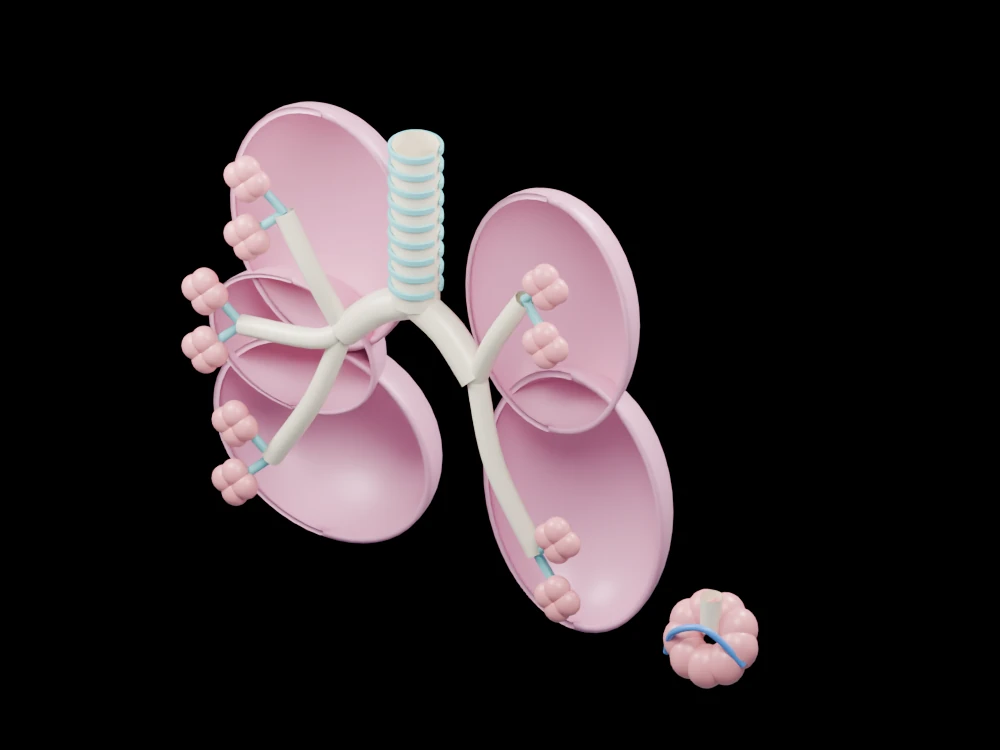 Lung repair crosses an anatomical boundary in a mouse study
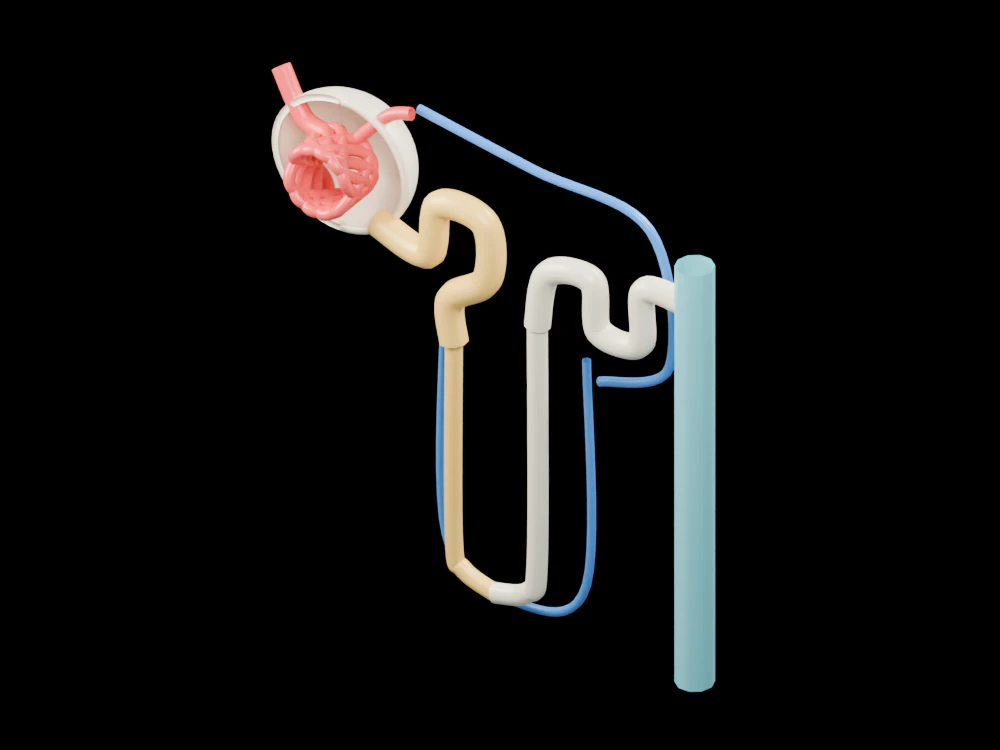 A pig-kidney transplant exposes an early immune hurdle
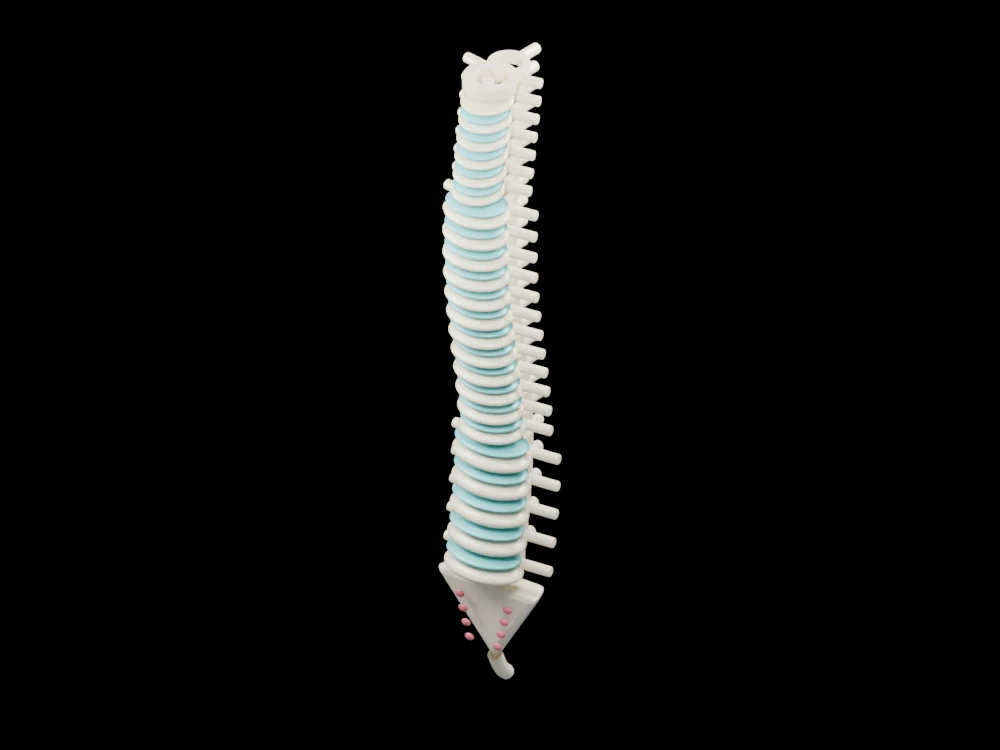 Spinal stimulation strengthens arm movement in a small stroke study
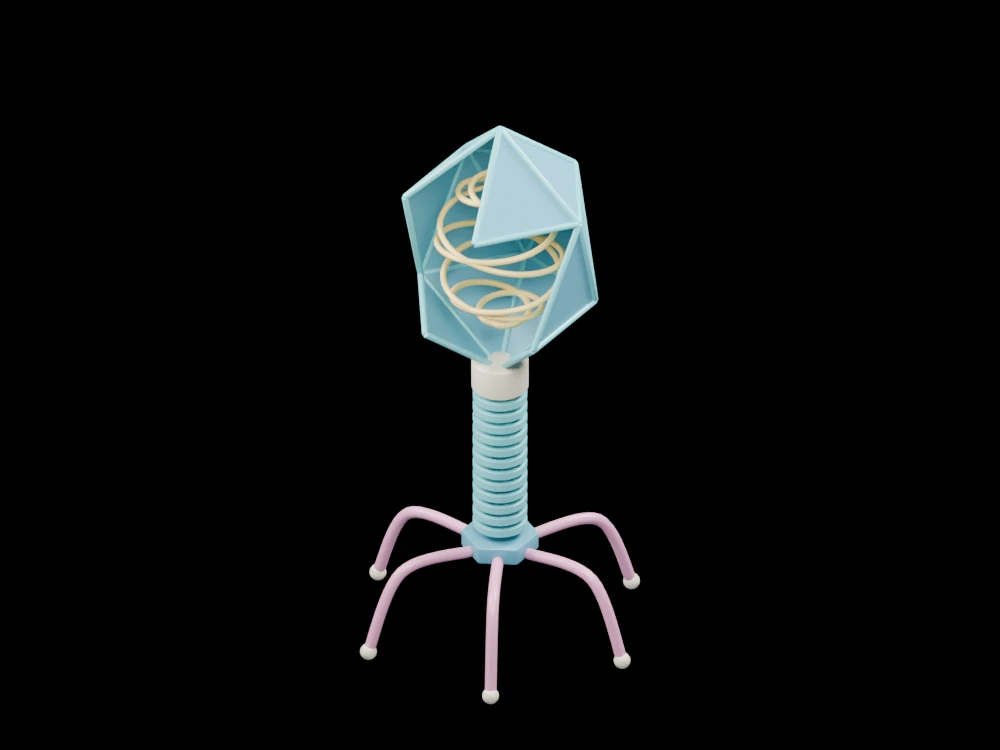 A three-person study explores a new angle on recurring UTIs
 A protein helps explain how developing leaf veins find direction
Explore the models
Sources and further reading
- Universal cell embedding provides a foundation model for cell biology Published 8 Jul 2026