

Electrical research · Research insights
A quantum material rectifies signals from radio to terahertz bands
A quantum-material device rectified signals from 19 MHz to 2.88 THz. Compare its physical principle with a familiar four-diode bridge.
Rectification turns an alternating electrical signal into a component that points in one direction. A diode bridge teaches that function clearly, but it is only one physical route to achieving it. At very high frequencies, researchers are investigating materials whose internal electronic response supplies the necessary nonlinearity.
Latest breakthrough
A May 2026 Nature Communications study demonstrates rectification in the material TaIrTe4 through the nonlinear Hall effect. The reported device operates at room temperature across 19 MHz to 2.88 THz without an applied electrical bias or external magnetic field. The team also demonstrates passive frequency mixing and a sensor-oriented energy-harvesting example. This is an experimental advance in broadband signal conversion. It is a different device from a four-diode mains bridge, and its frequency range does not imply that it can deliver the same power or replace a conventional power supply.
Hu and colleagues. Nature Communications (2026). Read the original study.
How the method works
The nonlinear Hall response allows the material's electrical output to contain a rectified component when driven by an alternating signal. This is a material-based mechanism distinct from arranging four ordinary diodes into a bridge. The researchers examine frequency response, passive mixing and an energy-harvesting example under their device conditions. A broad operating frequency range describes where a response is observed; it does not specify that the same output power or efficiency is available everywhere in that range. Those quantities need separate measurements and application-specific comparisons.
A simple analogy
A mechanism that responds differently to opposite directions can convert a back-and-forth input into a one-directional effect. That captures the idea of rectification. The experiment achieves it through a nonlinear electronic response, not a mechanical one-way valve, so the analogy does not explain the quantum material's detailed physics or its usable power limits.
The shared idea is a nonlinear response
A perfectly linear response to a symmetric alternating input averages to zero. Rectification requires a response that breaks that cancellation. In a bridge, diode orientation directs current through the load in the same direction during both half-cycles. In the research device, the material's electronic behaviour provides another route to a direct-current component. The common function helps explain why very different structures can be called rectifiers.
Where broadband capability could be useful
Our interpretation is that a single device covering a wide frequency span could simplify some sensing and communication experiments. Harvesting small amounts of ambient or deliberately transmitted energy is another possible direction. However, the useful output depends on incident power, coupling and conversion efficiency. A broad frequency response alone does not guarantee a practical self-powered sensor.
Keep frequency, efficiency and power separate
These three quantities answer different questions. A laboratory device can respond at a very high frequency while supplying little usable power. Reliable integration would also require repeatable material properties, packaging and thermal performance. The paper establishes an interesting physical platform, while a deployable system remains an engineering task with its own measurements. After rectification, controlling a supply voltage is a separate task, illustrated by the two-phase buck-converter prototype.
Use the bridge as the starting point
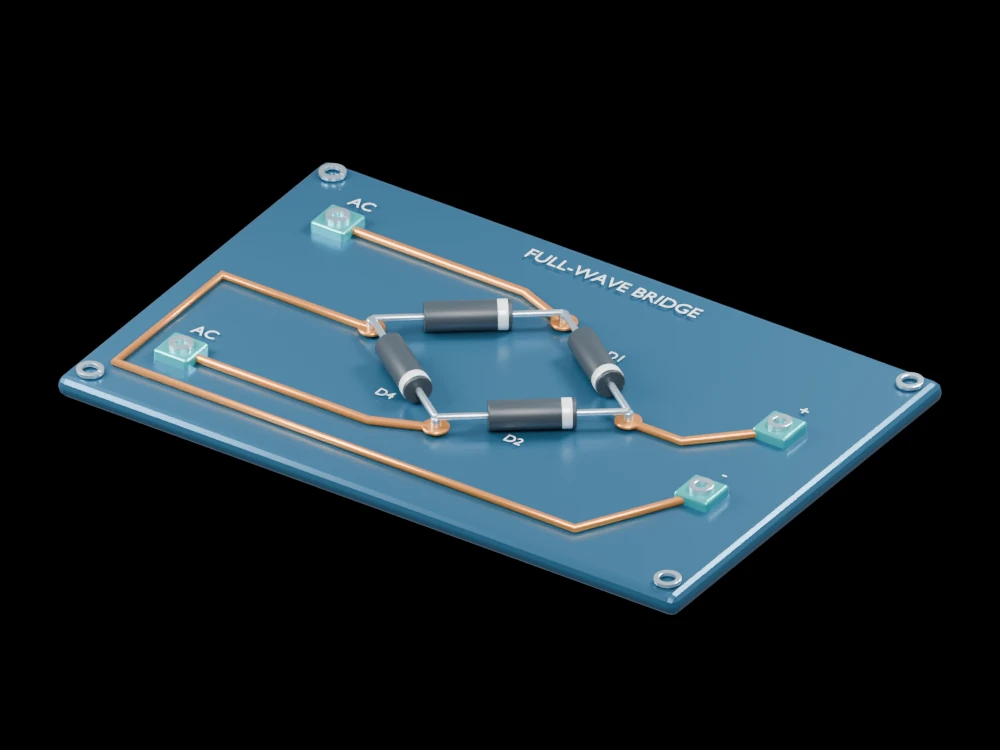
Explore the four diodes, cathode bands and routed copper in the gallery rectifier. Trace a current path for each polarity at the AC terminals and see why the output polarity stays fixed. That exercise explains the familiar circuit before comparing it with the research device. The model does not show TaIrTe4 or simulate nonlinear Hall transport.
Related articles
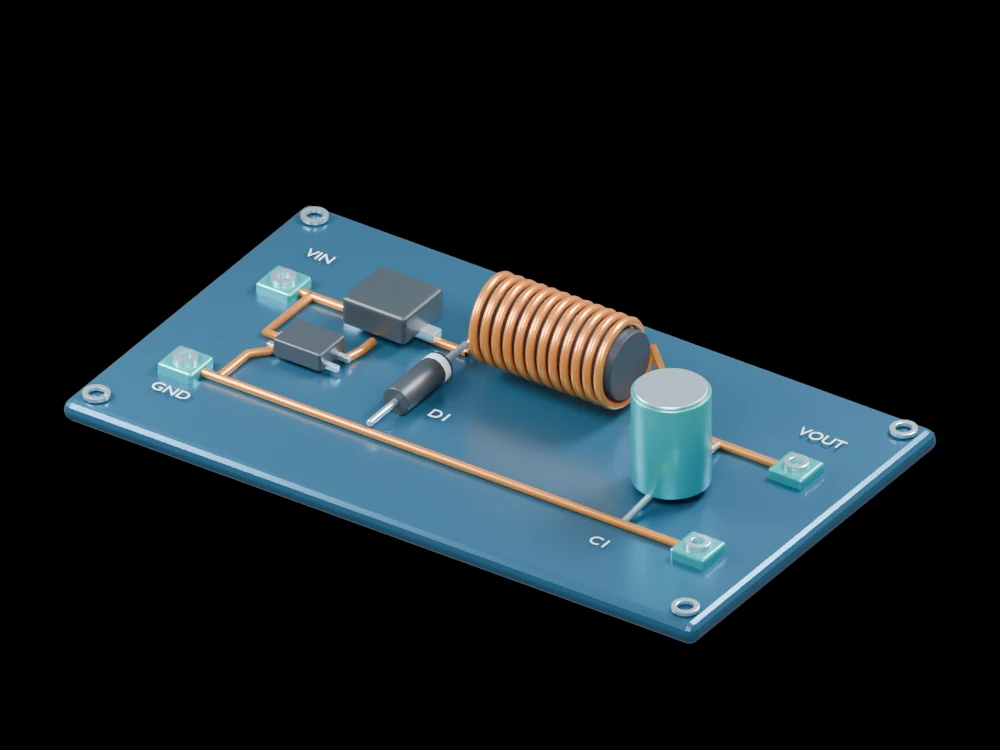 A two-phase buck converter tackles the light-load efficiency problem
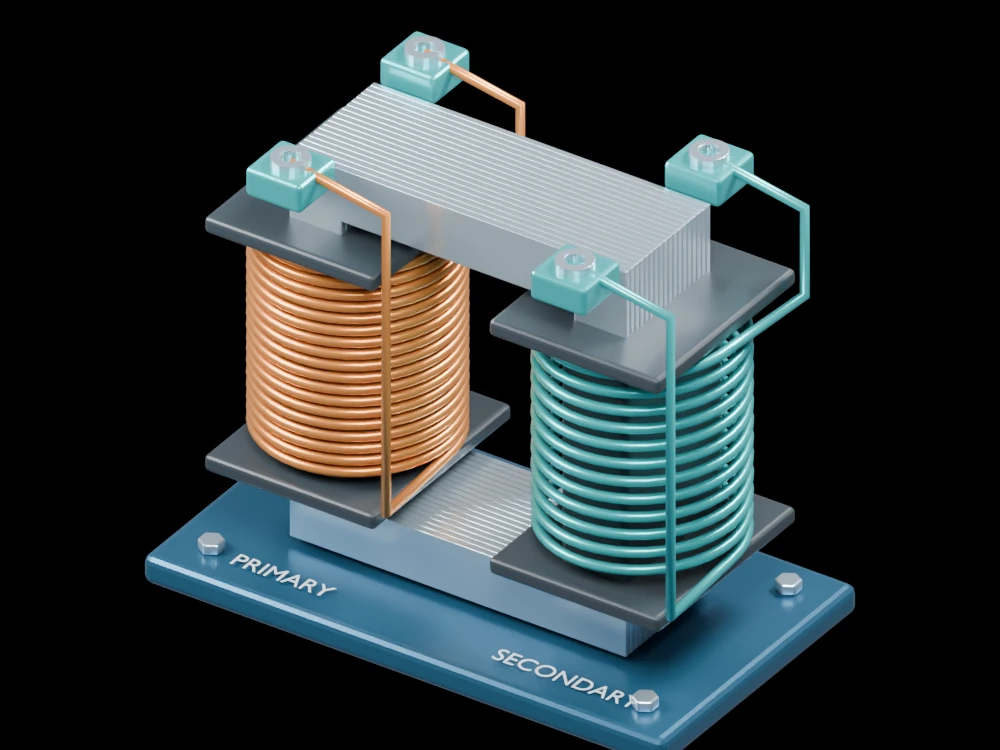 A 100 kW solid-state transformer reaches 98.57% efficiency in testingBoron arsenide draws heat from working GaN transistorsComplementary GaN logic puts both transistor types on one substrateA vibrating resonator helps a DC converter step down voltage efficientlyBuilt-in crystal polarization helps GaN switches withstand higher voltage
 Nanoscale spin rectifiers turn weak radio signals into useful powerA superconducting chip brings full-wave rectification into the coldElemental tellurium turns radio signals into a tunable room-temperature outputTin telluride rectifies signals from megahertz to terahertz without external biasA magnetic composite tackles eddy-current and hysteresis losses togetherNarrow magnetic domains help an iron-rich ribbon waste less energyMagnetic-domain motion can send energy into the crystal latticeEngineered interfaces let magnetic particles couple without the usual loss penalty
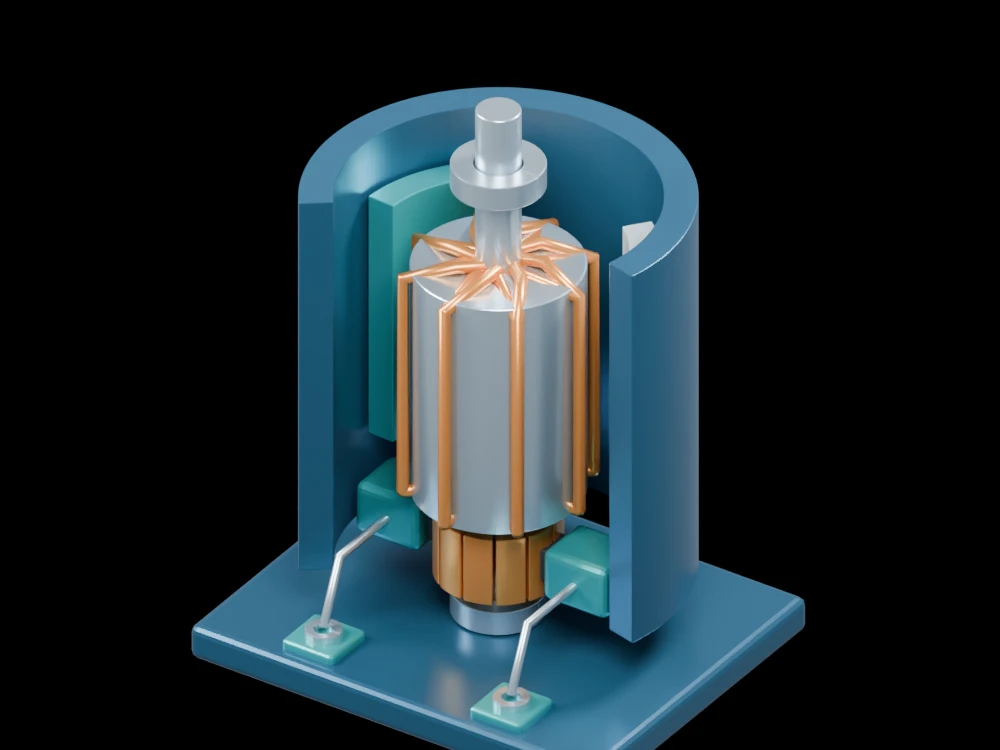 Changing a motor's magnetic geometry tackles a narrow noise peak
 Matched motor tests connect higher efficiency with lower heat
 A redesigned magnetic path cuts opening time in a solenoid study