

Rotating machinery · Research insights
Printed ceramic coatings reflect heat from curved metal surfaces
Researchers print photonic thermal barriers onto curved Inconel, combining optical reflection and insulation in a laboratory heat-protection demonstration.
Study published: 1 July 2025 · Nature Communications. Original research commentary by NPT Research.
Thermal protection is usually pictured as a thick insulating blanket. But a hot component also receives energy as radiation. A ceramic coating can therefore be designed both to slow heat conduction and to redirect part of the incoming thermal radiation.
Latest breakthrough
The researchers printed porous gadolinium-zirconate photonic structures onto curved Inconel substrates. Their coatings provided enhanced reflectance and reduced the underlying metal temperature by about 150 °C in a torch experiment. The advance also extends a colloidal printing approach beyond its earlier flat-substrate limitation.
Read the original study: Printing photonic-based thermal barrier coatings onto metal alloy.
How the study worked
The team controlled particle–substrate surface charge, suspension contact angle and the printing geometry. These choices govern where droplets spread and how particles assemble. Optical and thermal characterization then linked the deposited structure to its reflective behaviour and protection of the metal under the test heat source.
The idea in everyday terms
A useful comparison is a sunshade combined with an insulated roof. One part reduces incoming radiation; another slows the heat that still enters. The coating achieves these functions through its material and structure, rather than through a separate canopy. Its colour in ordinary light is not a reliable measure of thermal protection.
Why it matters
Curved surfaces are common in machinery, so a process that works only on a flat coupon has limited reach. A controlled deposition method creates a route toward testing more realistic shapes. The underlying alloy still needs attention, as hydrogen-related damage mechanisms make clear.
What the evidence does not establish
The temperature reduction is specific to the torch comparison. It is not an approved increase in turbine operating temperature or a prediction of fuel savings. Long-term adhesion, erosion, contamination and thermal cycling would determine whether the coating can survive service.
Explore the device
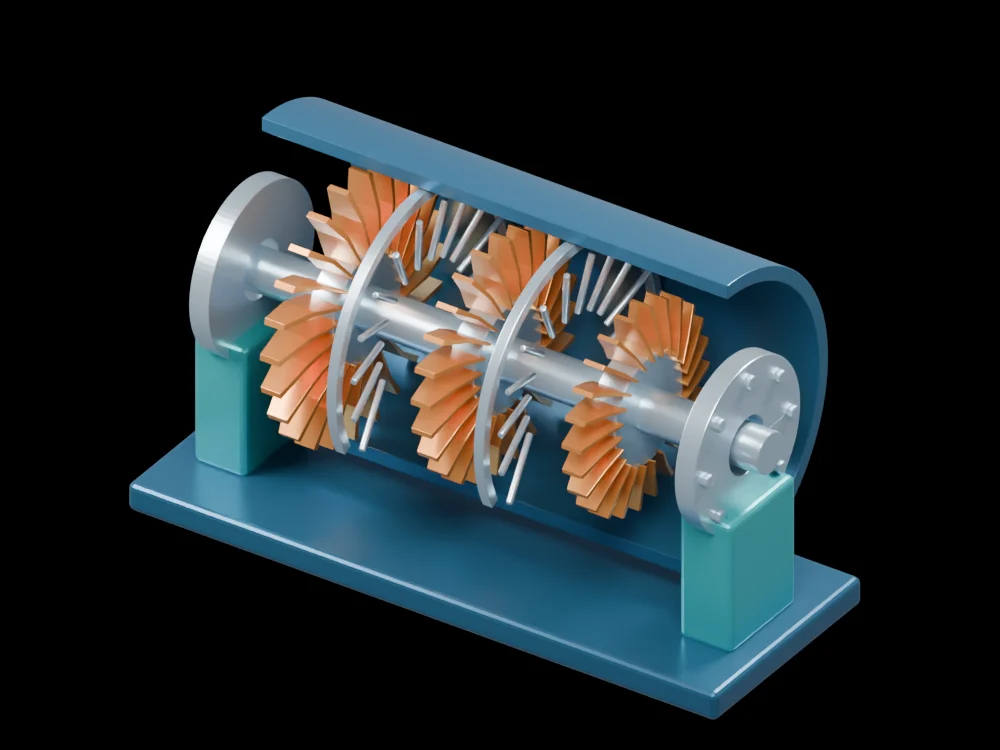
Inspect the curved blade surfaces in the axial turbine model to understand the coating challenge. The model is an educational assembly, not the experimental specimen. Real-time observation of laser-remelted crystals explains another manufacturing obstacle that must be solved before promising materials become reliable components.
Explore the Axial turbine assembly model and its description, or read our earlier device-focused research explanation.
Primary citation: Alberto Gomez-Gomez, Diego Ribas Gomes, Benedikt F. Winhard et al.. Printing photonic-based thermal barrier coatings onto metal alloy. Nature Communications (2025). 10.1038/s41467-025-61124-2.
Related articles
 Hydrogen can damage hot turbine alloys through a hidden chemical reactionX-rays catch crystals turning while a turbine alloy is laser-remeltedPrinted lattices strengthen turbine cooling in controlled rig testsA superalloy’s oxide layer becomes a lubricant at extreme temperatures
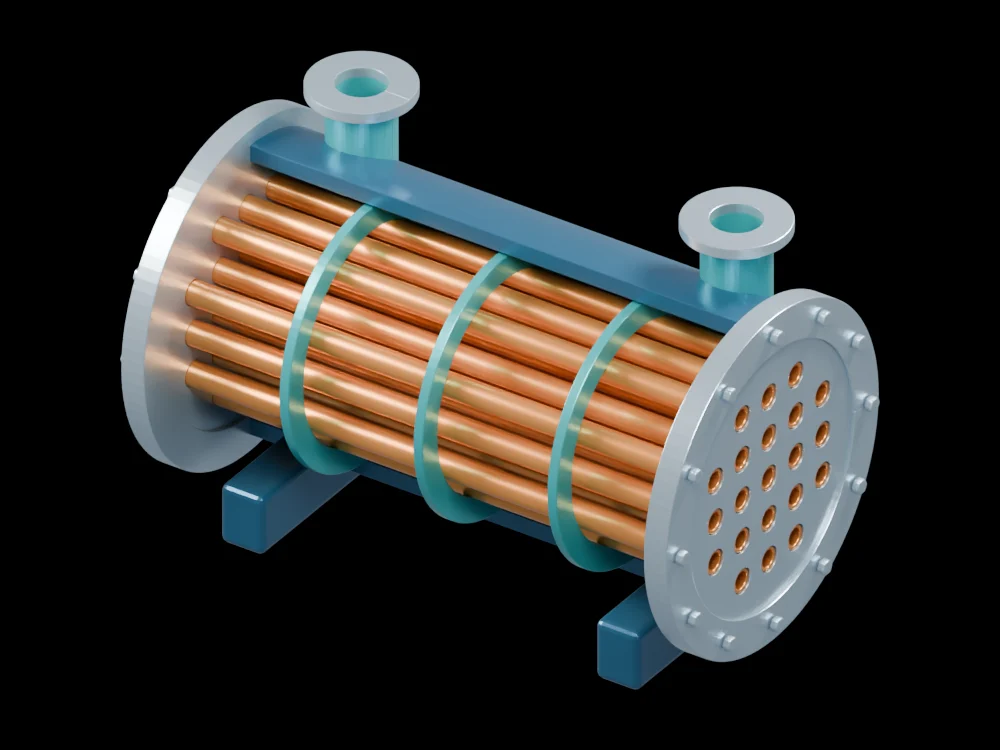 Cooling channels built with the electronics remove heat closer to its sourceA liquid-metal cooling elastomer changes shape to improve thermal contactA structured water film suppresses boiling bubbles while cooling hot airflowHeat drives a shape-memory cooling cycle in a small prototype
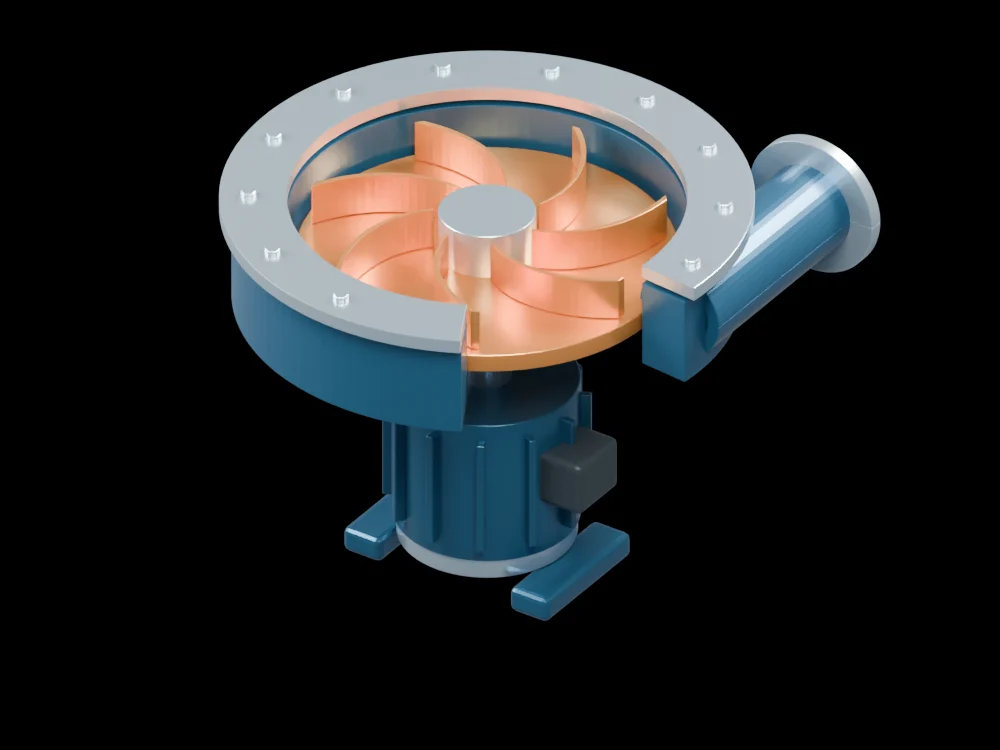 An accordion-inspired pump recreates complex flow waveformsA stretchable fibre becomes a pump that can be woven into clothingA soft pump runs on energy collected by a triboelectric generatorA soft pump moves liquid without a rotating impeller
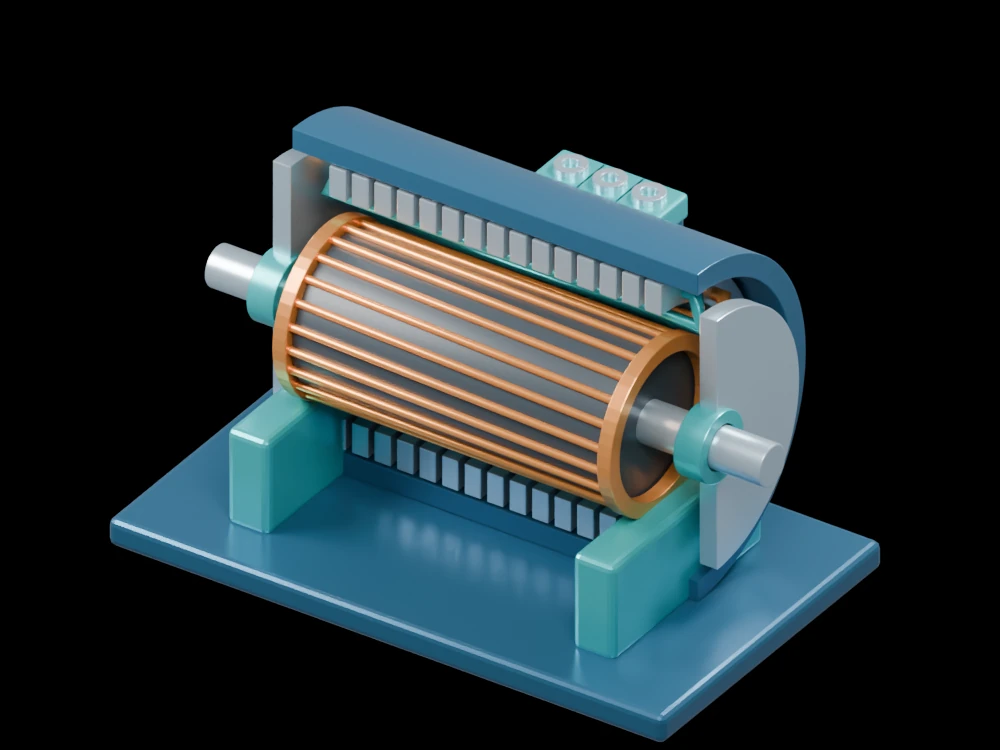 A rotating magnetic field steers crystallisation toward finer soft magnetsAn alloy becomes mechanically strong while remaining magnetically softTiny manufacturing deformations can disturb the magnetic structure of motor steelNanoprecipitates push ductile soft magnets toward two-gigapascal strengthPhysics-guided AI tracks pump cavitation as flow conditions change
 A pilot heat pump reuses distillation heat and reveals a trade-offMatched motor tests connect higher efficiency with lower heatA numerical design twists exchanger walls to improve heat transfer
Explore the models
Sources and further reading
- Printing photonic-based thermal barrier coatings onto metal alloy Published 1 Jul 2025