

Thermal systems · Research insights
Cooling channels built with the electronics remove heat closer to its source
A Nature study co-designs microfluidics and power electronics, demonstrating high heat removal with low pumping power under its test conditions.
Study published: 9 September 2020 · Nature. Original research commentary by NPT Research.
A heat sink is often designed after the electronics it must cool. That separation leaves a difficult journey between the heat-producing region and the coolant. Researchers instead designed liquid channels and electronics together within the same semiconductor substrate.
Latest breakthrough
The study demonstrated a monolithically integrated manifold-and-microchannel cooling structure. It removed heat flux above 1.7 kW per square centimetre using 0.57 W per square centimetre of pumping power in the reported tests. The central advance is the combined design of the heat source and its cooling path.
Read the original study: Co-designing electronics with microfluidics for more sustainable cooling.
How the study worked
The team fabricated integrated structures and measured thermal and hydraulic performance. The manifold distributed coolant through short channels near the hot regions. Comparing configurations connected the fluid-routing design to both heat transfer and the pumping work needed to sustain flow.
The idea in everyday terms
Putting water pipes close to a hot floor can transfer heat more directly than trying to cool the room from a distant wall. The chip-scale device applies that proximity principle with carefully engineered channels. The analogy explains thermal resistance, not a guarantee that adding water near electronics is automatically safe or effective.
Why it matters
Cooling consumes space and operating energy in power systems. Co-design can reveal improvements unavailable when the electrical and thermal parts are treated separately. Substrate-interface engineering approaches the same bottleneck through solid materials rather than a liquid-channel network. Structured evaporative cooling investigates a contrasting route that deliberately uses phase change.
What the evidence does not establish
The reported heat flux and pumping power apply to the experimental geometry and conditions. They do not establish a whole-data-centre energy reduction or eliminate cooling-system maintenance. Coolant distribution, reliability, contamination and packaging remain part of any deployed system.
Explore the device
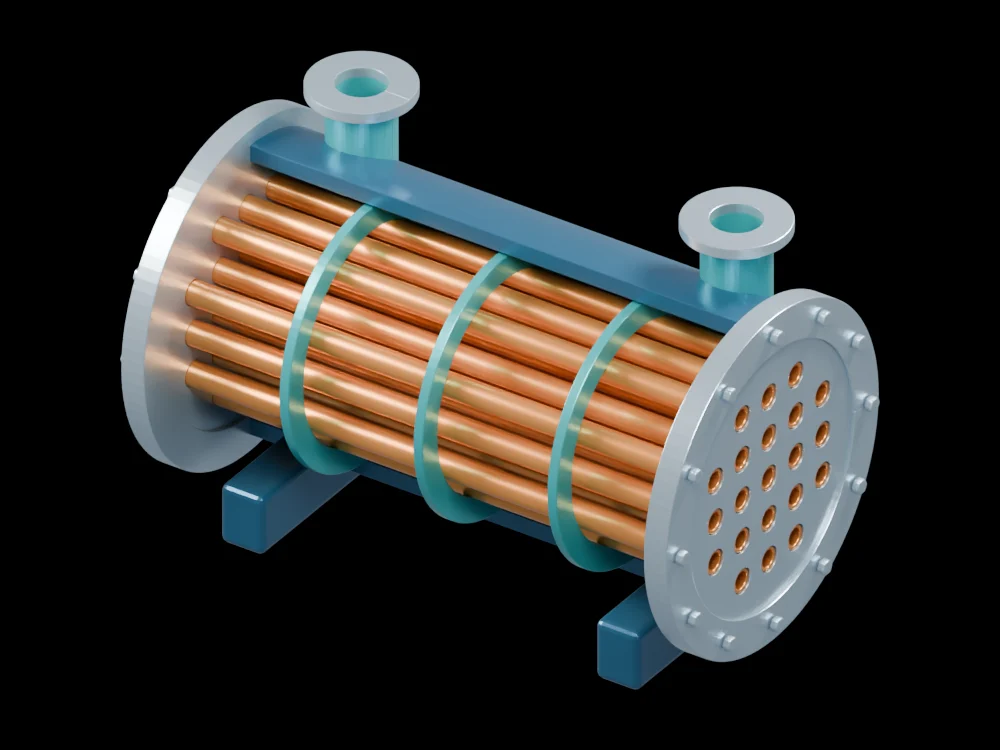
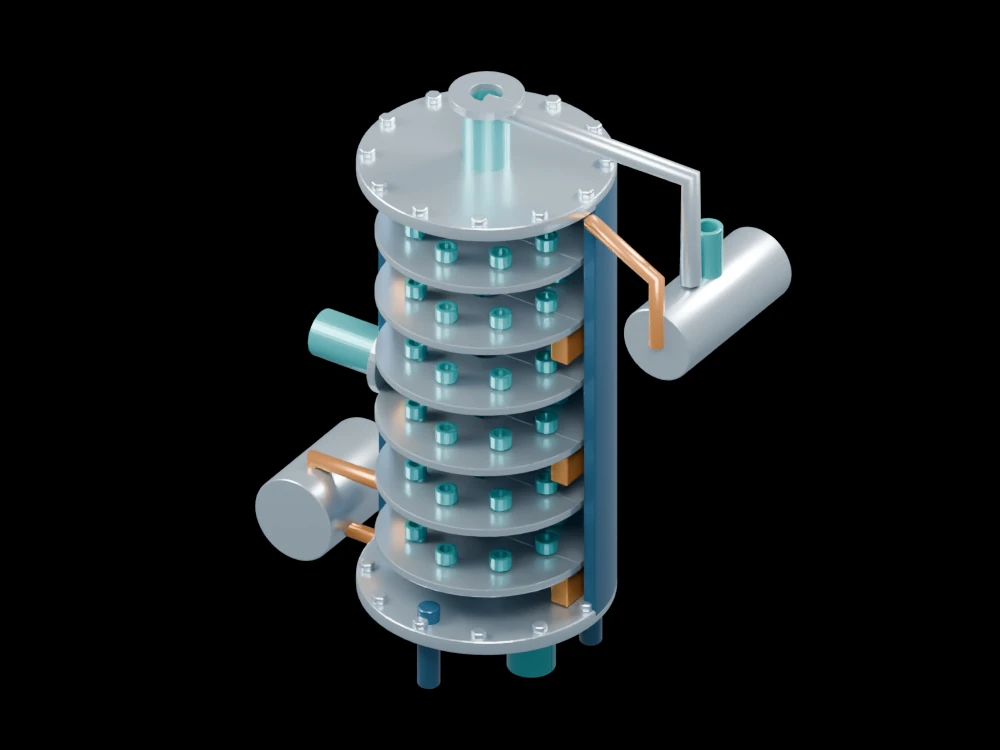
The shell-and-tube exchanger model shows the general task of moving heat between controlled flow paths. The paper moves that task much closer to the electronic heat source and uses a different geometry. Conformal cooling elastomers offer another example of redesigning the interface around the object being cooled.
Explore the Shell-and-tube heat exchanger model and its description, or read our earlier device-focused research explanation.
Primary citation: Remco van Erp, Reza Soleimanzadeh, Luca Nela et al.. Co-designing electronics with microfluidics for more sustainable cooling. Nature (2020). 10.1038/s41586-020-2666-1.
Related articles
 A liquid-metal cooling elastomer changes shape to improve thermal contactA structured water film suppresses boiling bubbles while cooling hot airflowA numerical design twists exchanger walls to improve heat transfer
 Boron arsenide draws heat from working GaN transistorsHeat drives a shape-memory cooling cycle in a small prototype
 A superalloy’s oxide layer becomes a lubricant at extreme temperaturesHydrogen can damage hot turbine alloys through a hidden chemical reactionPrinted ceramic coatings reflect heat from curved metal surfacesX-rays catch crystals turning while a turbine alloy is laser-remelted
 An accordion-inspired pump recreates complex flow waveformsA stretchable fibre becomes a pump that can be woven into clothingA soft pump runs on energy collected by a triboelectric generatorA soft pump moves liquid without a rotating impellerPrinted lattices strengthen turbine cooling in controlled rig tests
 A rotating magnetic field steers crystallisation toward finer soft magnetsAn alloy becomes mechanically strong while remaining magnetically softTiny manufacturing deformations can disturb the magnetic structure of motor steelNanoprecipitates push ductile soft magnets toward two-gigapascal strengthPhysics-guided AI tracks pump cavitation as flow conditions change
 A pilot heat pump reuses distillation heat and reveals a trade-offMatched motor tests connect higher efficiency with lower heat
Explore the models
Sources and further reading
- Co-designing electronics with microfluidics for more sustainable cooling Published 9 Sept 2020