

Thermal systems · Research insights
A liquid-metal cooling elastomer changes shape to improve thermal contact
A Nature Communications study combines conductive liquid-metal structures, flexible channels and pressure-controlled conformity in an active-cooling material.
Study published: 8 February 2024 · Nature Communications. Original research commentary by NPT Research.
A rigid cooler can perform well on a flat object yet leave insulating gaps against an irregular surface. Flexible materials make better contact, but many conduct heat poorly. Researchers combined conductivity and adaptable shape in one cooling structure.
Latest breakthrough
The team created a liquid-metal-skeleton elastomer with interconnected gyroid-shaped phases. It combined high thermal conductivity with large stretchability. Hydraulic pressure changed its shape to improve contact with complicated surfaces, and demonstrations included soft gripping, thermoregulation and thermal-energy harvesting.
Read the original study: Hydraulic-driven adaptable morphing active-cooling elastomer with bioinspired bicontinuous phases.
How the study worked
The researchers fabricated the internal conductive architecture, characterized thermal and mechanical behaviour, and controlled the channel pressure to alter conformity. Integration with a flexible thermoelectric device tested how the material could participate in a wider thermal system.
The idea in everyday terms
An ice pack that moulds around an object can make better contact than a hard block with the same overall size. This material adds an engineered conductive network and active shape control to that contact advantage. The analogy does not imply that softness alone ensures good heat transfer.
Why it matters
Thermal design increasingly needs to accommodate moving, curved or compliant objects. The work shows how the contact surface can become part of the cooling strategy. Wearable fibre pumps provide a related example of making fluidic hardware conform to the application rather than forcing the application around rigid components.
What the evidence does not establish
Reported material conductivity and stretchability are not a complete-system cooling rating. Contact pressure, fluid flow, sealing, thermal cycling and material containment would need assessment for a product. The demonstrations do not establish a universal wearable medical or thermal-safety device.
Explore the device
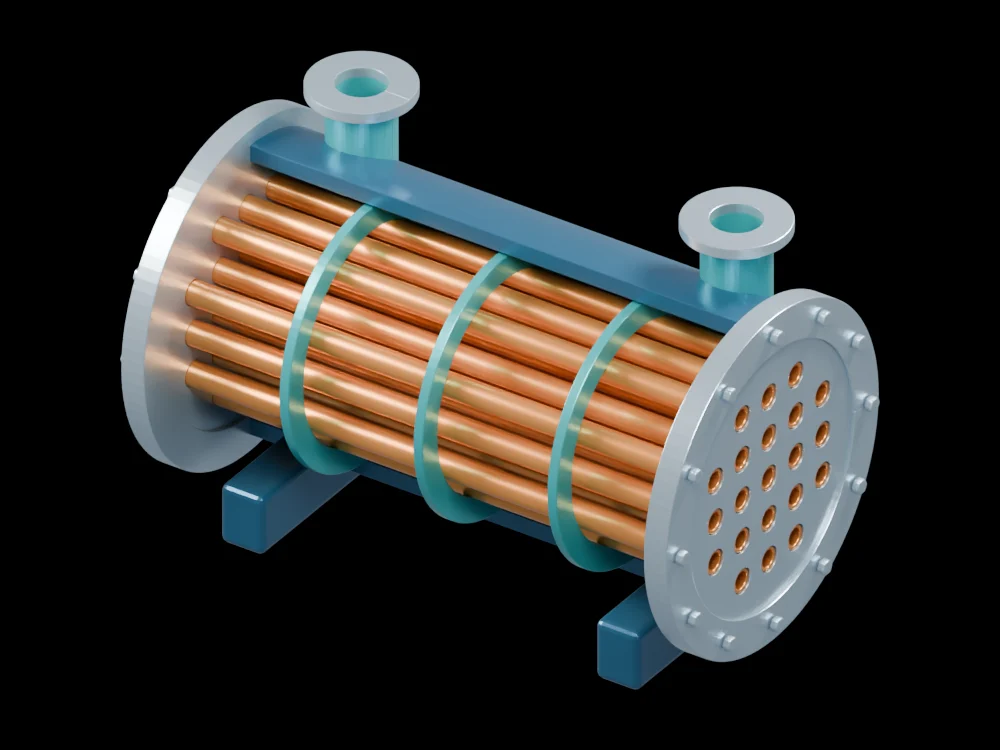
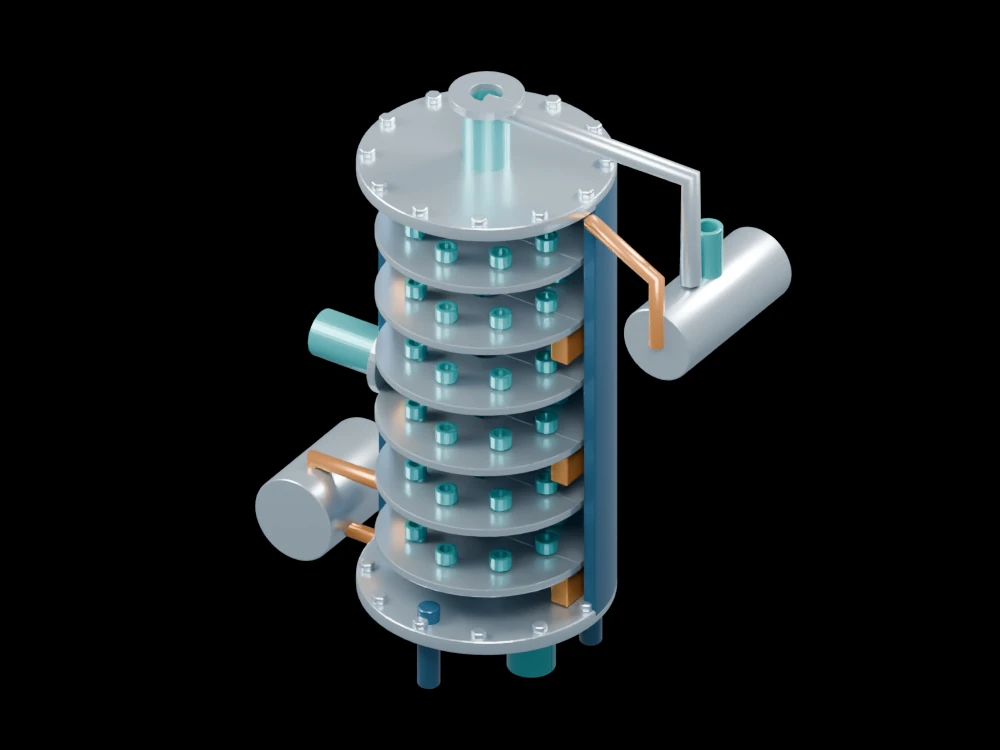
The shell-and-tube model shows a rigid, deliberately arranged heat-transfer surface. This study changes the surface architecture to accommodate a different class of objects. Co-designed microfluidic cooling shares the principle of reducing the thermal barriers between the heat source and the cooling path.
Explore the Shell-and-tube heat exchanger model and its description, or read our earlier device-focused research explanation.
Primary citation: Dehai Yu, Zhonghao Wang, Guidong Chi et al.. Hydraulic-driven adaptable morphing active-cooling elastomer with bioinspired bicontinuous phases. Nature Communications (2024). 10.1038/s41467-024-45562-y.
Related articles
 Cooling channels built with the electronics remove heat closer to its source
 A stretchable fibre becomes a pump that can be woven into clothingA numerical design twists exchanger walls to improve heat transferA structured water film suppresses boiling bubbles while cooling hot airflowHeat drives a shape-memory cooling cycle in a small prototype
 A superalloy’s oxide layer becomes a lubricant at extreme temperaturesHydrogen can damage hot turbine alloys through a hidden chemical reactionPrinted ceramic coatings reflect heat from curved metal surfacesX-rays catch crystals turning while a turbine alloy is laser-remeltedAn accordion-inspired pump recreates complex flow waveformsA soft pump runs on energy collected by a triboelectric generatorA soft pump moves liquid without a rotating impellerPrinted lattices strengthen turbine cooling in controlled rig tests
 A rotating magnetic field steers crystallisation toward finer soft magnetsAn alloy becomes mechanically strong while remaining magnetically softTiny manufacturing deformations can disturb the magnetic structure of motor steelNanoprecipitates push ductile soft magnets toward two-gigapascal strengthPhysics-guided AI tracks pump cavitation as flow conditions change
 A pilot heat pump reuses distillation heat and reveals a trade-offMatched motor tests connect higher efficiency with lower heat