

Fluid machinery · Research insights
An accordion-inspired pump recreates complex flow waveforms
Hemadyne uses a compact mechanical pump and control algorithm to reproduce changing flow patterns for laboratory microphysiological systems.
Study published: 25 May 2026 · Nature Communications. Original research commentary by NPT Research.
Many pumps are selected for their average flow rate. Some experiments instead need a precise sequence of forward flow, pauses and brief reversals. An accordion-inspired system shows how the shape of a flow waveform can become the central design requirement.
Latest breakthrough
The researchers developed Hemadyne, a compact standalone mechanical pump paired with a control algorithm. It reproduced clinical flow-waveform patterns at a reported 400-millisecond temporal resolution, including forward and backward phases. Laboratory vessel-chip experiments demonstrated sustained perfusion and the importance of the imposed flow pattern.
Read the original study: Hemadyne: accordion-inspired perfusion for microphysiological systems.
How the study worked
The team compared the programmed pump output with reference waveforms and evaluated stability and response. They also tested the system in microphysiological experiments. The engineering advance lies in combining mechanical displacement with control that can recreate a changing flow history, rather than only maintaining a steady average.
The idea in everyday terms
A musical instrument is defined by its timing and changing loudness, not simply the total amount of air passing through it. Similarly, two pumps can deliver the same average volume while producing very different experiences downstream. The analogy explains the waveform requirement without equating a laboratory flow system with a complete living circulation.
Why it matters
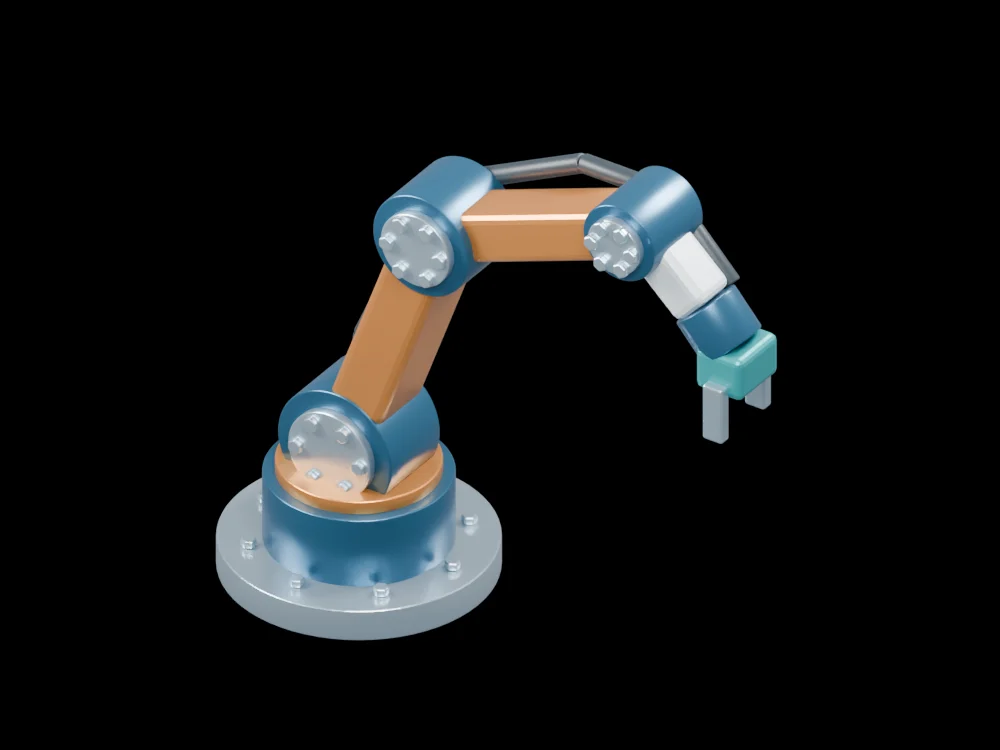
Controlled waveforms can make laboratory experiments more informative and reproducible. More generally, the work illustrates why a pump should be designed around the load’s needs. Motion-aware robotic control reflects a related principle: the trajectory can matter as much as the force or average output.
What the evidence does not establish
This is a laboratory research platform, not a patient treatment or a substitute for a clinical heart-assist device. A successful vessel-chip experiment does not establish medical effectiveness. The reported temporal resolution and tested flow conditions should define how the result is interpreted.
Explore the device
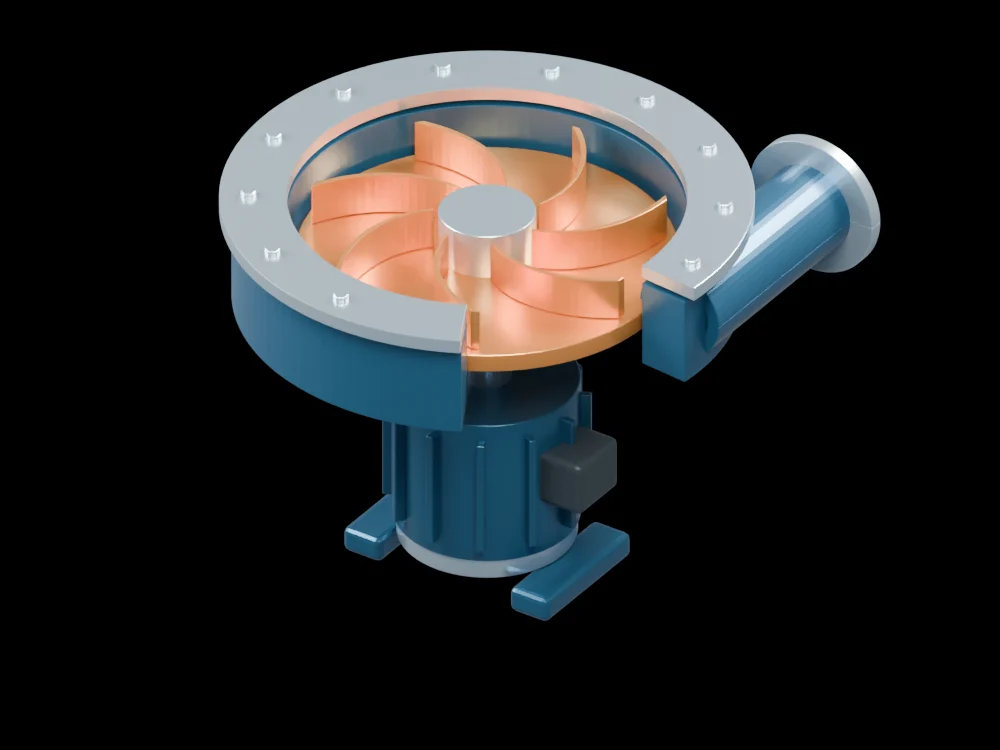
Use the centrifugal-pump model to understand continuous impeller-driven flow, then compare it with controlled mechanical displacement. The distinction explains why one pump architecture cannot serve every application equally well. Soft pumping devices make a different trade-off, prioritising conformity and integration.
Explore the Centrifugal pump model and its description, or read our earlier device-focused research explanation.
Primary citation: Ankit Kumar, Shivanand Pattanshetti, Rushangi D. Patel et al.. Hemadyne: accordion-inspired perfusion for microphysiological systems. Nature Communications (2026). 10.1038/s41467-026-73722-9.
Related articles
 A soft pump moves liquid without a rotating impellerPhysics-guided AI tracks pump cavitation as flow conditions change
 A robot can prevent slipping by changing its path instead of only squeezing harderA stretchable fibre becomes a pump that can be woven into clothingA soft pump runs on energy collected by a triboelectric generator
 A superalloy’s oxide layer becomes a lubricant at extreme temperaturesHydrogen can damage hot turbine alloys through a hidden chemical reaction
 Cooling channels built with the electronics remove heat closer to its sourcePrinted ceramic coatings reflect heat from curved metal surfacesA liquid-metal cooling elastomer changes shape to improve thermal contactA structured water film suppresses boiling bubbles while cooling hot airflowHeat drives a shape-memory cooling cycle in a small prototypeX-rays catch crystals turning while a turbine alloy is laser-remelted
 Dense liquid-metal coils combine soft actuation, sensing and communication
 A DNA clutch lets a magnetic nanomotor engage and disengage its rotorElastic electromagnetic mechanisms give small robots muscle-like motionElectric current drives a molecular rotor and changes its conductance
 An engineered environment changes a microscopic engine’s power–efficiency trade-off
 Nanotextured surfaces help graphite maintain an extremely low-friction contactProjected light assembles and drives reconfigurable microscopic machinesLiquid-metal networks turn a flat elastomer into programmable 3D surfacesMagnetic measurements expose early fatigue changes in tested metalsMicroscopy reveals which internal features hold a permanent magnet’s directionLight drives microscopic gear trains through patterned metasurfacesChanging the character of noise shifts a microscopic engine’s best operating speed
 A rotating magnetic field steers crystallisation toward finer soft magnetsSoft robots steer their shape by combining local electromagnetic vectorsFriction consolidates brittle magnetic powders in a single processing stepA soft robot arm stays bendable while transmitting continuous torqueAn alloy becomes mechanically strong while remaining magnetically softTiny manufacturing deformations can disturb the magnetic structure of motor steelNanoprecipitates push ductile soft magnets toward two-gigapascal strengthSwitching between unstable modes can stabilise a mechanical oscillatorPrinted lattices strengthen turbine cooling in controlled rig testsChanging a motor's magnetic geometry tackles a narrow noise peak
 A pilot heat pump reuses distillation heat and reveals a trade-offMatched motor tests connect higher efficiency with lower heatA numerical design twists exchanger walls to improve heat transferA configurable joint reveals how small gaps turn motion into impacts
Explore the models
Sources and further reading
- Hemadyne: accordion-inspired perfusion for microphysiological systems Published 25 May 2026