

Fluid machinery · Research insights
A soft pump moves liquid without a rotating impeller
A foundational Nature study demonstrates flexible, stretchable electrohydrodynamic pumps and integrates them into thermal-management and soft-actuation devices.
Study published: 15 August 2019 · Nature. Original research commentary by NPT Research.
Soft robots can have flexible bodies yet still depend on a rigid pump elsewhere. That dependency limits how freely the complete machine can move. A 2019 study addressed the pressure source directly, introducing pumps designed to deform with the systems they drive.
Latest breakthrough
The researchers demonstrated bidirectional soft pumps based on charge-injection electrohydrodynamics. They integrated a pump into a glove for active thermal management and into an inflatable structure for self-contained fluidic actuation. The pumping mechanism uses electrical forces in the liquid rather than a conventional motor-driven rotor.
Read the original study: Stretchable pumps for soft machines.
How the study worked
The study developed deformable pump structures and tested their fluid-driving behaviour. Integration experiments connected pumping to heat transfer and inflation. These demonstrations assessed a practical systems question: whether a soft pressure source could contribute a useful function while embedded in another deformable device.
The idea in everyday terms
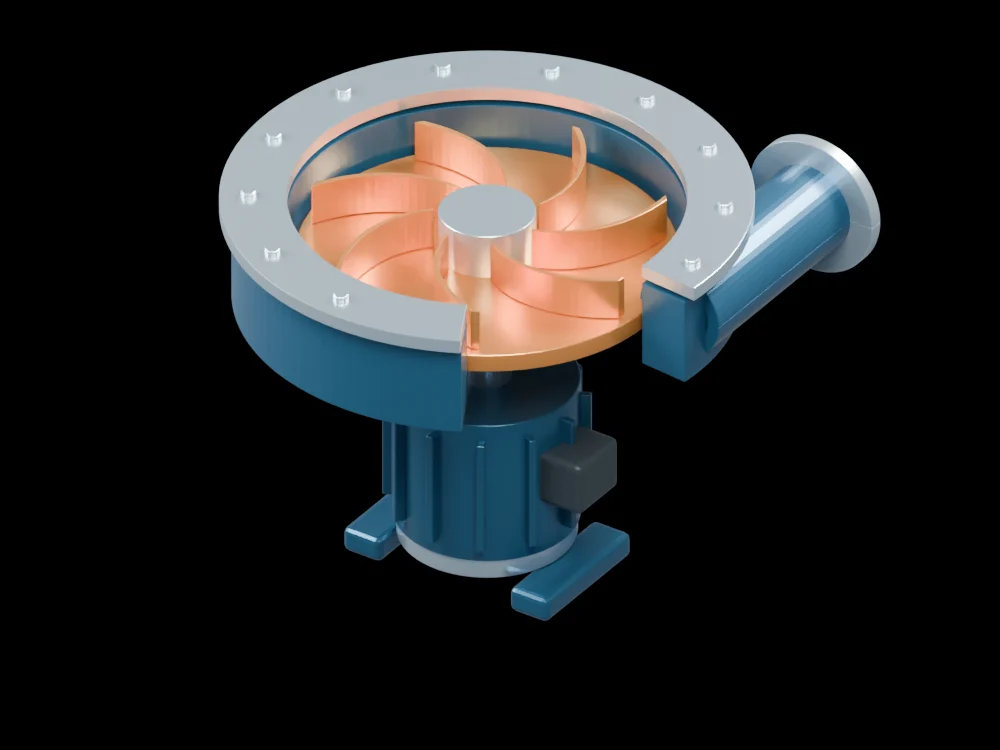
A conventional centrifugal pump is like a paddle wheel that repeatedly pushes liquid. An electrohydrodynamic pump is closer to giving tiny charged carriers a directional push and letting them transfer that motion to the surrounding fluid. The analogy distinguishes the force sources without treating every liquid as electrically interchangeable.
Why it matters
This work helped make the pump a designable soft component. Later research on fibre-shaped pumps extends that idea into long, textile-compatible structures. Such architectures could support wearable cooling, portable fluidics and soft machines whose operation is less constrained by rigid hardware.
What the evidence does not establish
Softness does not remove the need for an electrical supply, compatible working fluid or safe insulation. The demonstration should not be read as equivalent to pumping drinking water at industrial scale. Its important contribution is a new architecture within the operating conditions studied.
Explore the device
Inspect the motor, shaft and impeller in the centrifugal-pump model, then consider which of those functions the soft device replaces. The gallery assembly explains the conventional reference, not the experimental geometry. An accordion-inspired precision pump offers another example of matching pump architecture to a very different application.
Explore the Centrifugal pump model and its description, or read our earlier device-focused research explanation.
Primary citation: Vito Cacucciolo, Jun Shintake, Yu Kuwajima et al.. Stretchable pumps for soft machines. Nature (2019). 10.1038/s41586-019-1479-6.
Related articles
 An accordion-inspired pump recreates complex flow waveformsA stretchable fibre becomes a pump that can be woven into clothingPhysics-guided AI tracks pump cavitation as flow conditions changeA soft pump runs on energy collected by a triboelectric generator
 A superalloy’s oxide layer becomes a lubricant at extreme temperaturesHydrogen can damage hot turbine alloys through a hidden chemical reaction
 Cooling channels built with the electronics remove heat closer to its sourcePrinted ceramic coatings reflect heat from curved metal surfacesA liquid-metal cooling elastomer changes shape to improve thermal contactA structured water film suppresses boiling bubbles while cooling hot airflowHeat drives a shape-memory cooling cycle in a small prototypeX-rays catch crystals turning while a turbine alloy is laser-remelted
 Dense liquid-metal coils combine soft actuation, sensing and communication
 A DNA clutch lets a magnetic nanomotor engage and disengage its rotorElastic electromagnetic mechanisms give small robots muscle-like motionElectric current drives a molecular rotor and changes its conductance
 An engineered environment changes a microscopic engine’s power–efficiency trade-off
 Nanotextured surfaces help graphite maintain an extremely low-friction contactProjected light assembles and drives reconfigurable microscopic machinesLiquid-metal networks turn a flat elastomer into programmable 3D surfacesMagnetic measurements expose early fatigue changes in tested metalsMicroscopy reveals which internal features hold a permanent magnet’s directionLight drives microscopic gear trains through patterned metasurfacesChanging the character of noise shifts a microscopic engine’s best operating speed
 A rotating magnetic field steers crystallisation toward finer soft magnetsSoft robots steer their shape by combining local electromagnetic vectorsFriction consolidates brittle magnetic powders in a single processing stepA soft robot arm stays bendable while transmitting continuous torqueAn alloy becomes mechanically strong while remaining magnetically softTiny manufacturing deformations can disturb the magnetic structure of motor steelNanoprecipitates push ductile soft magnets toward two-gigapascal strengthSwitching between unstable modes can stabilise a mechanical oscillatorPrinted lattices strengthen turbine cooling in controlled rig testsChanging a motor's magnetic geometry tackles a narrow noise peak
 A pilot heat pump reuses distillation heat and reveals a trade-offMatched motor tests connect higher efficiency with lower heatA numerical design twists exchanger walls to improve heat transferA configurable joint reveals how small gaps turn motion into impacts
Explore the models
Sources and further reading
- Stretchable pumps for soft machines Published 15 Aug 2019