

Thermal systems · Research insights
Heat drives a shape-memory cooling cycle in a small prototype
Nature Energy demonstrates thermally driven elastocaloric cooling with shape-memory films, separating material-level performance from complete-device results.
Study published: 28 August 2026 · Nature Energy. Original research commentary by NPT Research.
Cooling usually requires work from a compressor or another powered actuator. Elastocaloric materials can change temperature when mechanically loaded and unloaded, but supplying that motion is a challenge. Researchers investigated whether heat could drive the actuator that operates the cooling material.
Latest breakthrough
The team paired a thermally powered shape-memory actuator with tailored shape-memory-alloy refrigerant films. It demonstrated a 4.0 K device-level temperature span under Joule-heated actuation and 2.2 K when driven by an external heat source. The larger 12.9 K film-level result is a separate material-scale measurement.
Read the original study: Heat-driven elastocaloric cooling with shape memory films.
How the study worked
The prototype linked actuator heating, mechanical loading and heat exchange in a cycle. Tests compared electrically generated heating with an external heat source. Distinguishing film temperature change from the complete device response showed how integration affects the available cooling performance.
The idea in everyday terms
Imagine using one temperature-responsive spring to operate another element whose temperature changes when stressed. The system couples two material responses into a cycle. This picture is helpful for following energy flow, but the device still needs a hot source, a heat-rejection path and carefully timed exchange.
Why it matters
The approach suggests a route for investigating waste heat or solar thermal energy as part of a cooling system. That opportunity depends on the complete energy balance. Integrated liquid cooling solves a different thermal problem by moving unwanted heat efficiently rather than generating a cooling cycle.
What the evidence does not establish
This is a small prototype with limited demonstrated temperature span, not a ready replacement for building air conditioning. Film-level and device-level figures must not be interchanged. System efficiency, scale-up, durability and the useful temperature range require further evaluation.
Explore the device
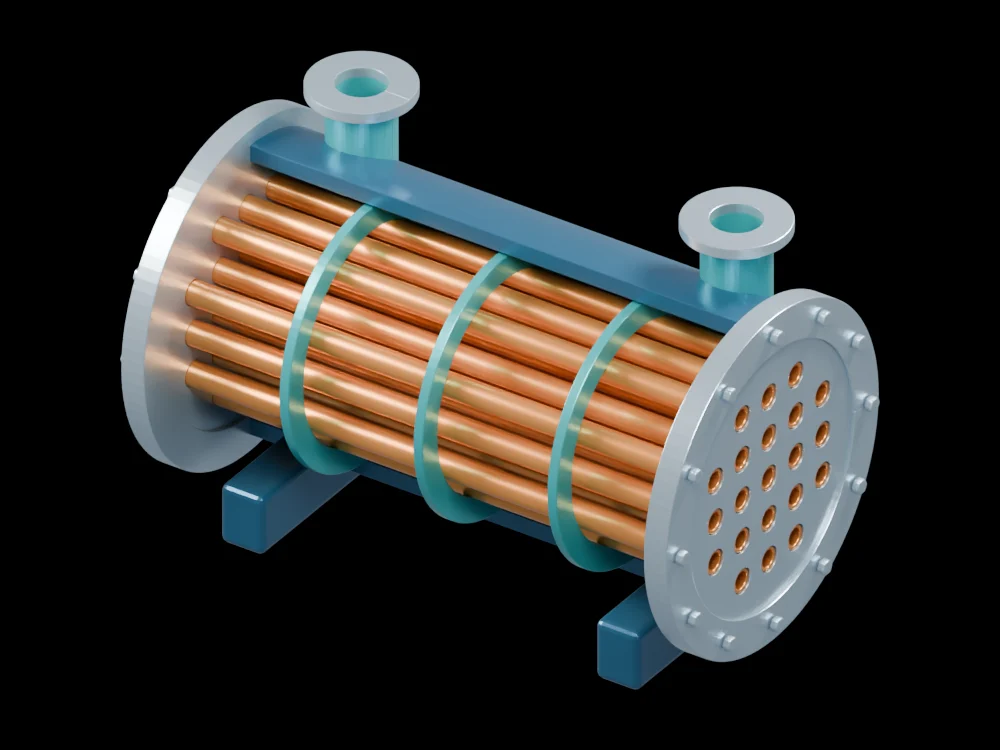
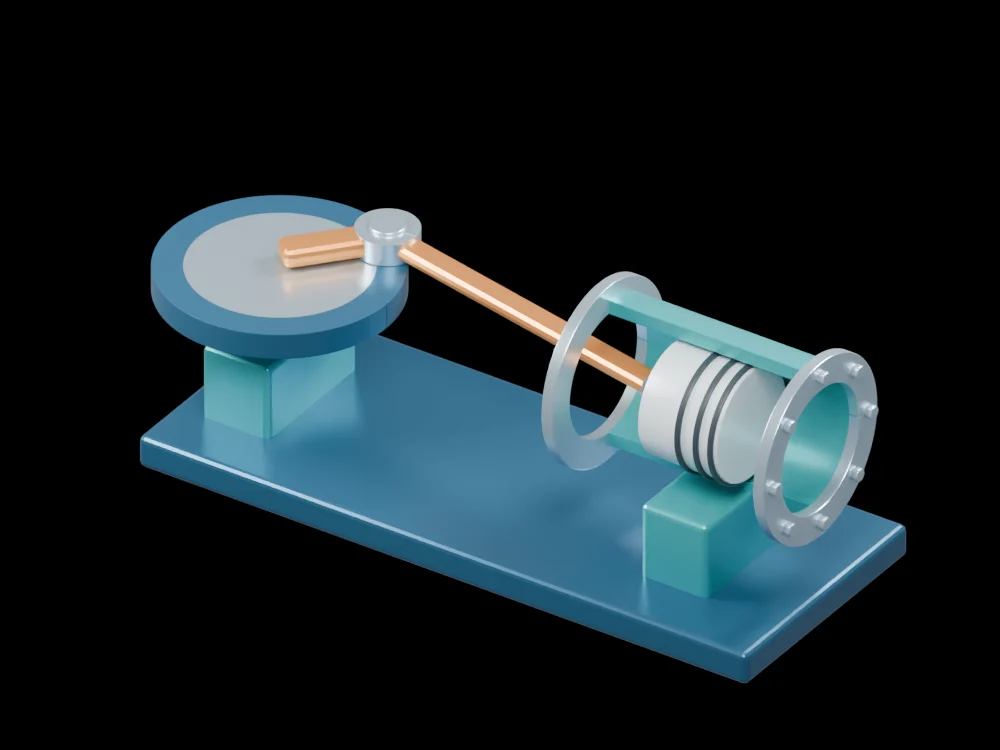
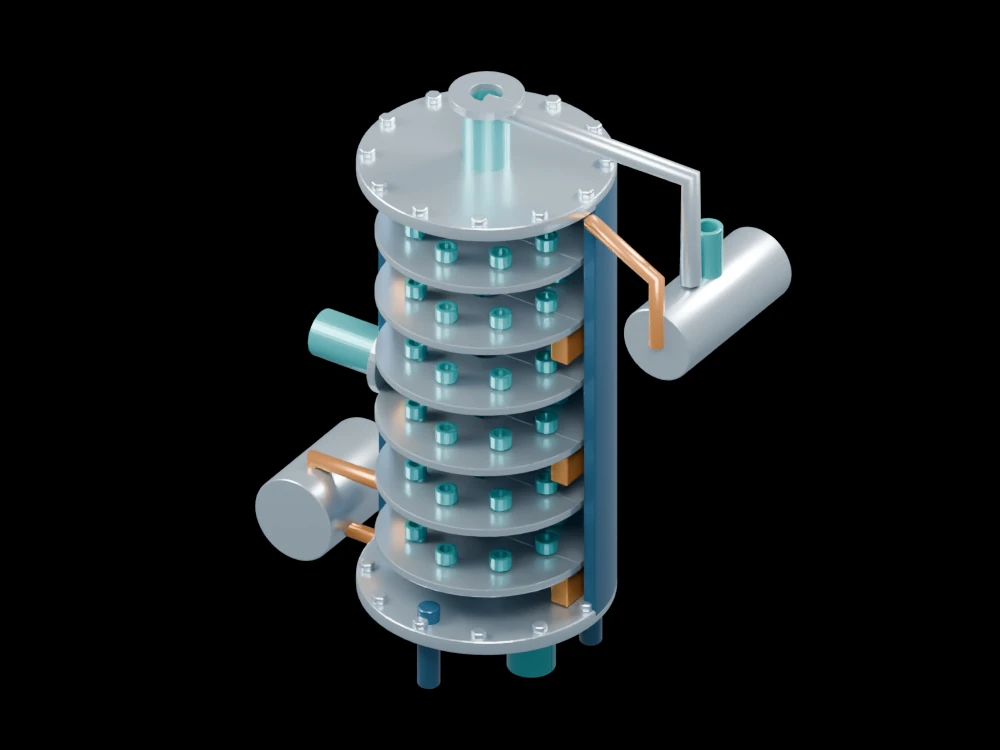
The heat-exchanger model helps identify the need to move heat between separate regions. The research adds an active material cycle that must be connected to such heat-transfer paths. Engine-cycle timing research provides another perspective on why the sequence of energy exchanges matters.
Explore the Shell-and-tube heat exchanger model and its description, or read our earlier device-focused research explanation.
Primary citation: Yi-Ting Hsiau, Shuichi Miyazaki, Manfred Kohl et al.. Heat-driven elastocaloric cooling with shape memory films. Nature Energy (2026). 10.1038/s41560-026-02122-6.
Related articles
 Cooling channels built with the electronics remove heat closer to its sourceA numerical design twists exchanger walls to improve heat transfer
 An engineered environment changes a microscopic engine’s power–efficiency trade-offA liquid-metal cooling elastomer changes shape to improve thermal contactA structured water film suppresses boiling bubbles while cooling hot airflow
 A superalloy’s oxide layer becomes a lubricant at extreme temperaturesHydrogen can damage hot turbine alloys through a hidden chemical reactionPrinted ceramic coatings reflect heat from curved metal surfacesX-rays catch crystals turning while a turbine alloy is laser-remelted
 An accordion-inspired pump recreates complex flow waveformsA stretchable fibre becomes a pump that can be woven into clothingA soft pump runs on energy collected by a triboelectric generatorA soft pump moves liquid without a rotating impellerPrinted lattices strengthen turbine cooling in controlled rig tests
 A rotating magnetic field steers crystallisation toward finer soft magnetsAn alloy becomes mechanically strong while remaining magnetically softTiny manufacturing deformations can disturb the magnetic structure of motor steelNanoprecipitates push ductile soft magnets toward two-gigapascal strengthPhysics-guided AI tracks pump cavitation as flow conditions change
 A pilot heat pump reuses distillation heat and reveals a trade-offMatched motor tests connect higher efficiency with lower heat
Explore the models
Sources and further reading
- Heat-driven elastocaloric cooling with shape memory films Published 28 Aug 2026