

Mechanical research · Research insights
Gearbox vibrations reveal clues to efficiency during operation
A 2026 test-rig study links gearbox vibration to changing transmission efficiency. Explore the gears, the measurement advance and its practical limits.
A planetary gearbox can carry a large load in a compact housing, but its efficiency is not a single number that remains constant throughout a revolution. Contact forces change, shafts accelerate and the teeth vibrate. A useful question for engineers is whether those vibrations can reveal how power actually moves through the mechanism.
Latest breakthrough
A 2026 paper in Mechanical Systems and Signal Processing combines a dynamic gear model with vibration measurements to estimate transmission efficiency during operation. The researchers built a dedicated test rig to compare predictions with measurements. They report a 0.26% relative error for mean dynamic efficiency; the corresponding error for peak dynamic efficiency was 7.05%. These figures describe prediction error, rather than an increase in the gearbox's efficiency. The contribution is a way to connect operating-state measurements with power-flow calculations instead of relying entirely on static design assumptions.
Wang and colleagues. Mechanical Systems and Signal Processing (2026). Read the original study.
How the method works
The method connects a dynamic gear model with measured vibration and compares inferred efficiency against observations on a dedicated rig. Dynamic means that changes during operation are part of the description, rather than being replaced by a single static operating assumption. Mean efficiency and peak efficiency are evaluated separately, which is why their prediction errors differ. A small relative error describes agreement for the tested quantity and conditions; it does not mean the gearbox produces extra energy or that its efficiency increased by that percentage. Other machines require their own validation.
A simple analogy
Listening to a machine's rhythm may provide clues about what is happening inside, but the sound alone needs an interpretation checked against something measurable. The research builds that connection using a physical model and a test rig. A gearbox is not being diagnosed by intuition: the analogy highlights indirect observation, while the quantitative inference depends on calibration and validation.
Why motion changes the calculation
Power depends on both torque and angular speed. A compact mechanism can therefore have the expected average speed ratio while still experiencing uneven instantaneous loading. Imagine following one marked tooth through engagement: the load it carries changes as neighbouring teeth enter and leave contact. A vibration signal contains information about that changing interaction, although it also contains noise from supports and other components.
What this could change in maintenance
Our interpretation is that a well-calibrated method could help engineers compare operating conditions before committing to a redesign. It could also make efficiency discussions more useful: an average loss and a brief high-loss event deserve different responses. For industrial users, the potential value lies in better diagnosis and more informed maintenance decisions. Electricity savings would have to be demonstrated after a specific operational or mechanical change.
Where the evidence stops
A successful test-rig comparison is not a universal calibration for every planetary transmission. Lubrication, temperature, mounting stiffness and wear can change the relationship between measured vibration and internal forces. The larger peak error is especially relevant when a decision depends on short transients rather than the mean. Independent tests on other gearboxes would strengthen the case for deployment. Using a measured signal to infer an internal condition is also central to physics-guided pump cavitation detection.
Read the mechanism in 3D
Open the planetary gearbox model and locate the central sun, the surrounding planets and their carrier. Follow how the ring housing constrains their motion, then look at the bearing arrangement. This makes it easier to separate a speed relationship from a load path. The gallery assembly illustrates the mechanism; it does not reproduce the paper's experimental gearbox or supply a calibrated vibration model.
Related articles
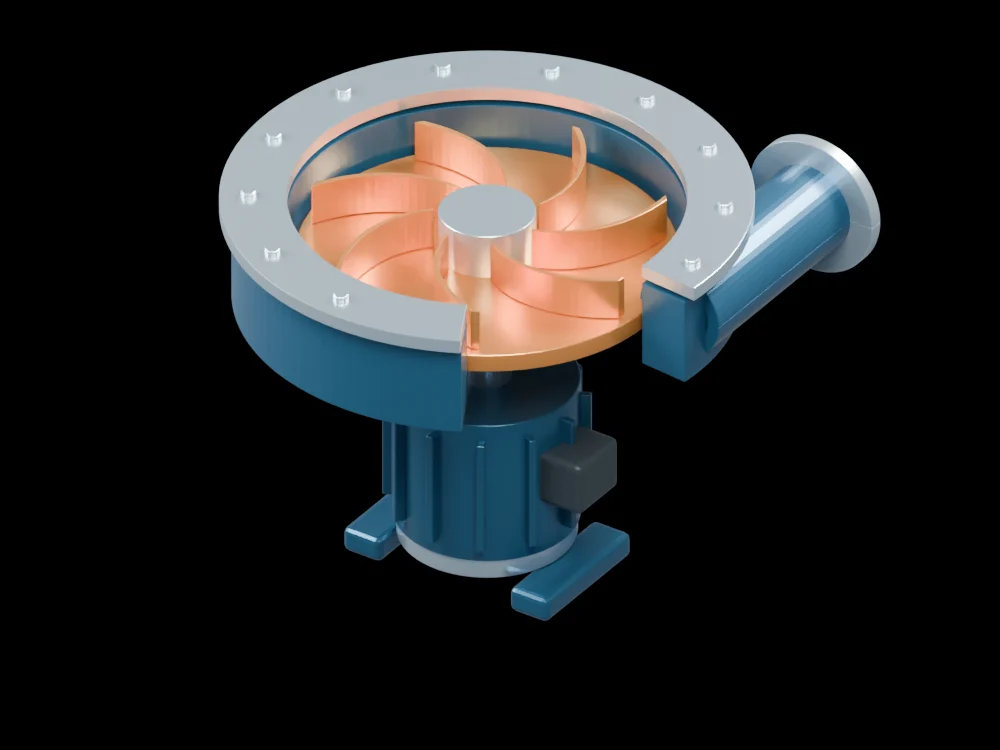 Physics-guided AI tracks pump cavitation as flow conditions change
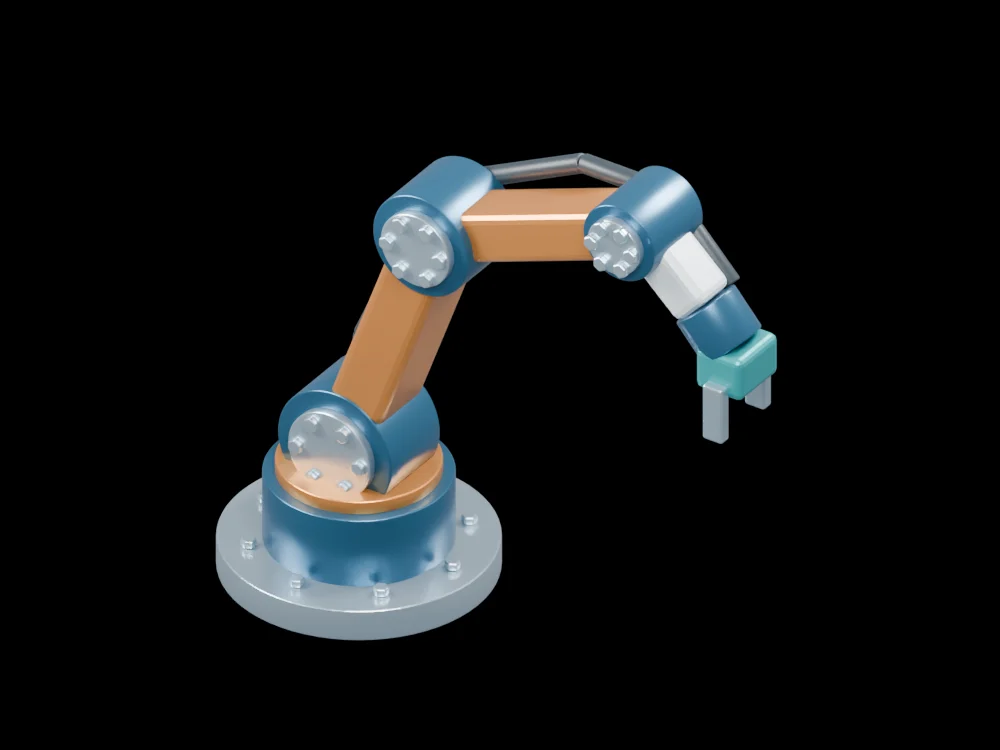 A camera learns the motion map needed to control very different robotsA new representation makes changing robot contacts easier to predict
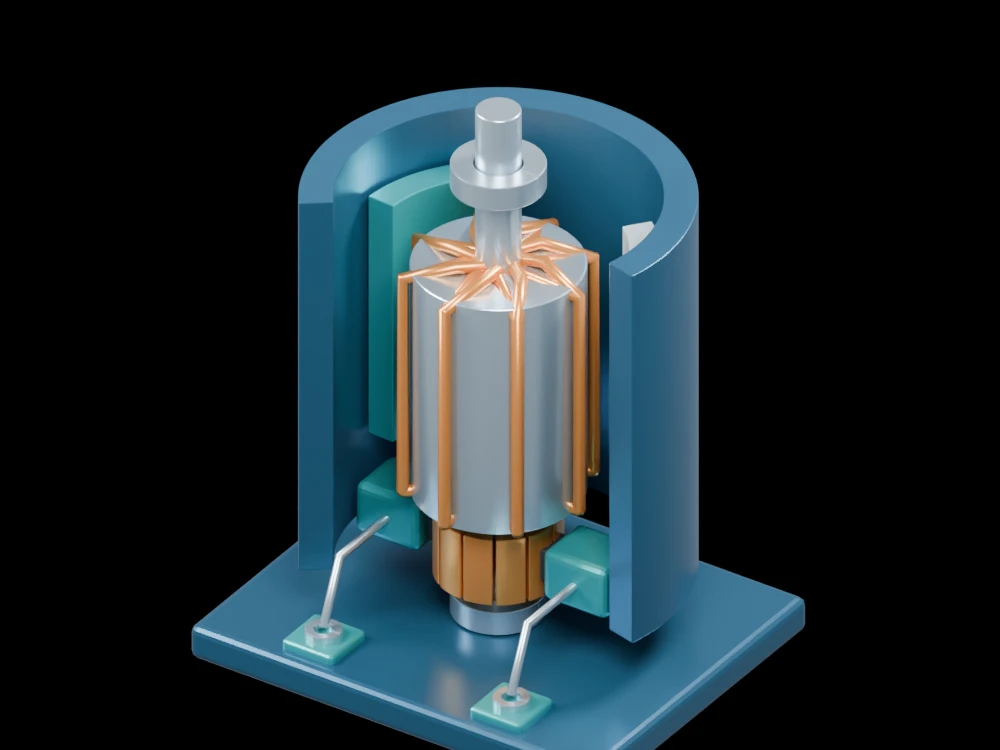 A DNA clutch lets a magnetic nanomotor engage and disengage its rotorElectric current drives a molecular rotor and changes its conductance
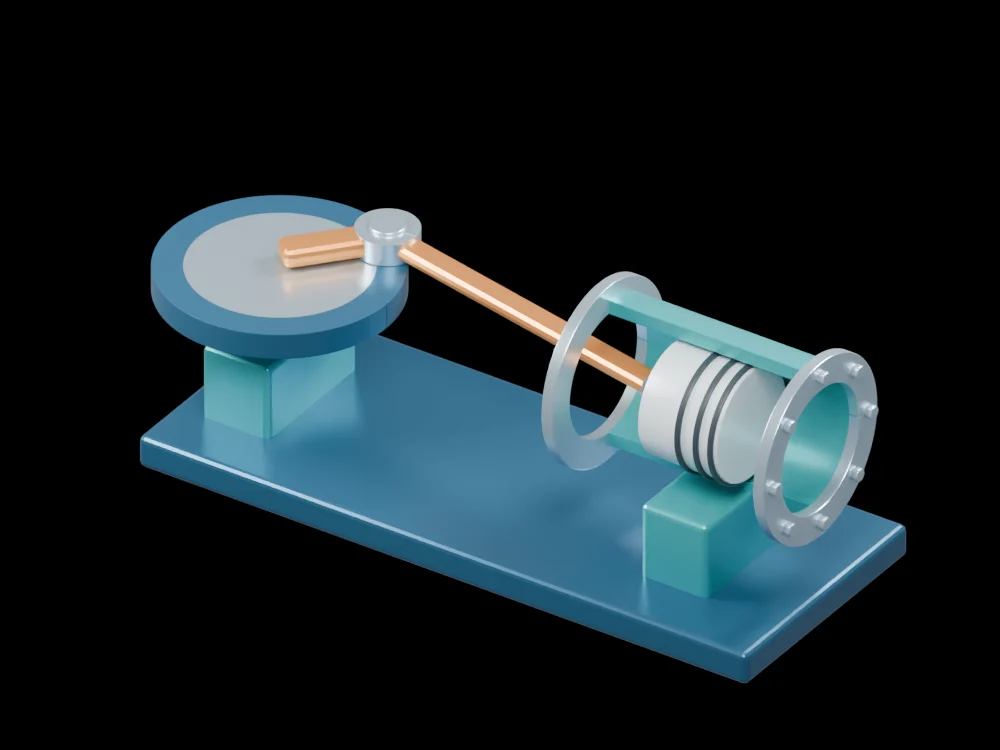 An engineered environment changes a microscopic engine’s power–efficiency trade-off
 Nanotextured surfaces help graphite maintain an extremely low-friction contactProjected light assembles and drives reconfigurable microscopic machines
 A magnetic composite tackles eddy-current and hysteresis losses togetherNarrow magnetic domains help an iron-rich ribbon waste less energyMagnetic measurements expose early fatigue changes in tested metalsMagnetic-domain motion can send energy into the crystal latticeMicroscopy reveals which internal features hold a permanent magnet’s directionLight drives microscopic gear trains through patterned metasurfacesChanging the character of noise shifts a microscopic engine’s best operating speedRobots learn a predictive body model by watching their own movementsA robot can prevent slipping by changing its path instead of only squeezing harder
 A rotating magnetic field steers crystallisation toward finer soft magnetsFriction consolidates brittle magnetic powders in a single processing stepA soft robot arm stays bendable while transmitting continuous torqueEngineered interfaces let magnetic particles couple without the usual loss penaltyAn alloy becomes mechanically strong while remaining magnetically softTiny manufacturing deformations can disturb the magnetic structure of motor steelNanoprecipitates push ductile soft magnets toward two-gigapascal strengthSwitching between unstable modes can stabilise a mechanical oscillatorMatched motor tests connect higher efficiency with lower heat
 Printed lattices strengthen turbine cooling in controlled rig testsA modular robot arm succeeds in 91.67% of 240 test trials
 A numerical design twists exchanger walls to improve heat transferA configurable joint reveals how small gaps turn motion into impacts