

Electrical machines · Research insights
A DNA clutch lets a magnetic nanomotor engage and disengage its rotor
Nature Nanotechnology reports a reversible molecular clutch inside a roughly 200-nanometre rotary machine.
Study published: 7 February 2024 · Nature Nanotechnology. Original research commentary by NPT Research.
A running motor is useful only when its motion reaches the intended load. Larger machines solve this with clutches, but a reversible connection is difficult to build at nanometre scale. Researchers used molecular recognition to control that connection inside a tiny rotary system.
Latest breakthrough
The device confines a magnetic engine particle within a porous spherical rotor. Built-in DNA strands couple or decouple the two parts in response to molecular inputs. Keeping the engine inside the cage prevents the components from dispersing when disengaged, allowing a reversible clutch-like function.
Read the original study: A magnetically powered nanomachine with a DNA clutch.
How the study worked
The team constructed and tested the magnetically driven nanomachine and its input-responsive coupling. The porous enclosure permits molecular signals to reach the mechanism. In vitro receptor-activation experiments provided a demonstration of transmitted mechanical force, rather than merely showing that an isolated magnetic particle could rotate.
The idea in everyday terms
A car clutch can disconnect a running engine from the transmission without removing the engine from the vehicle. The nanocage performs the important containment role, while DNA recognition controls engagement. This analogy describes the machine logic; the actual molecular interactions and external magnetic drive differ fundamentally from automotive hardware.
Why it matters
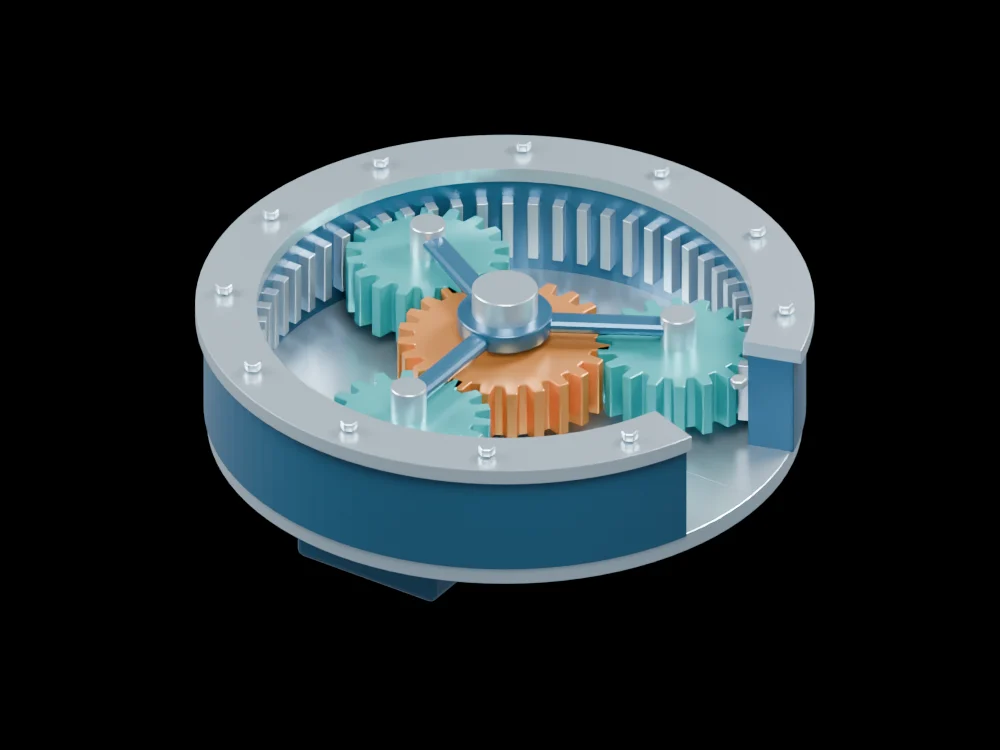
A controllable coupling adds a useful layer of mechanical decision-making to small machines. It separates power generation from delivery to a load. Light-driven microscopic gears offer a complementary view of how multiple moving components can work together at reduced scale.
What the evidence does not establish
The reported biological demonstration was performed in vitro. It does not establish a safe treatment, delivery system or autonomous medical robot. Molecular inputs, magnetic fields, environmental conditions and the available force all constrain possible uses.
Explore the device
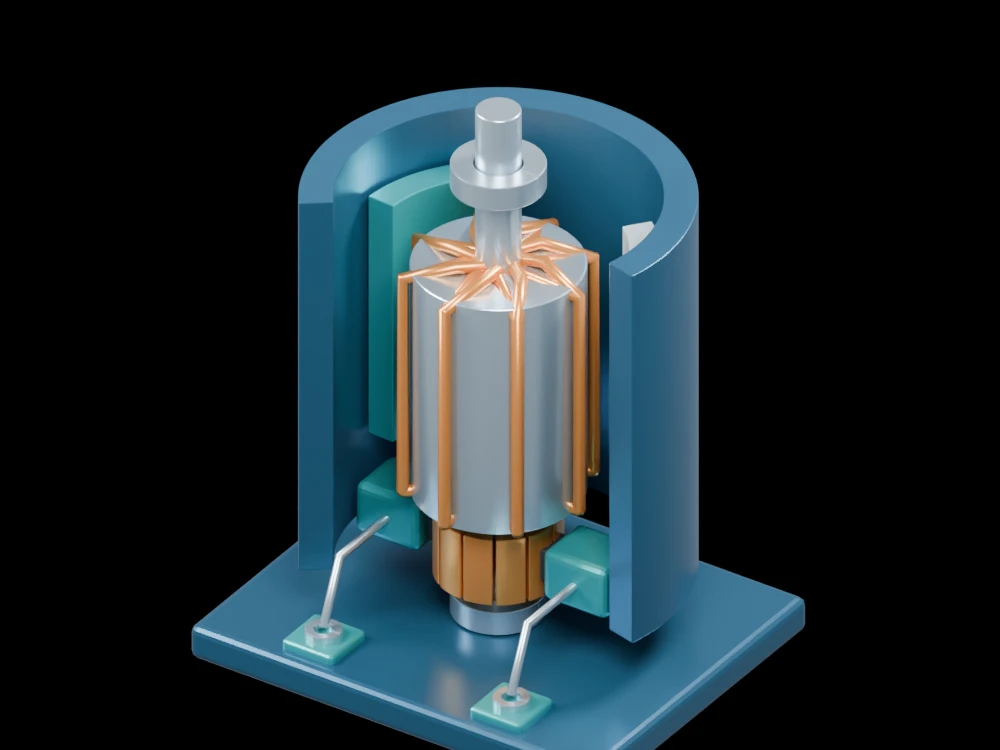
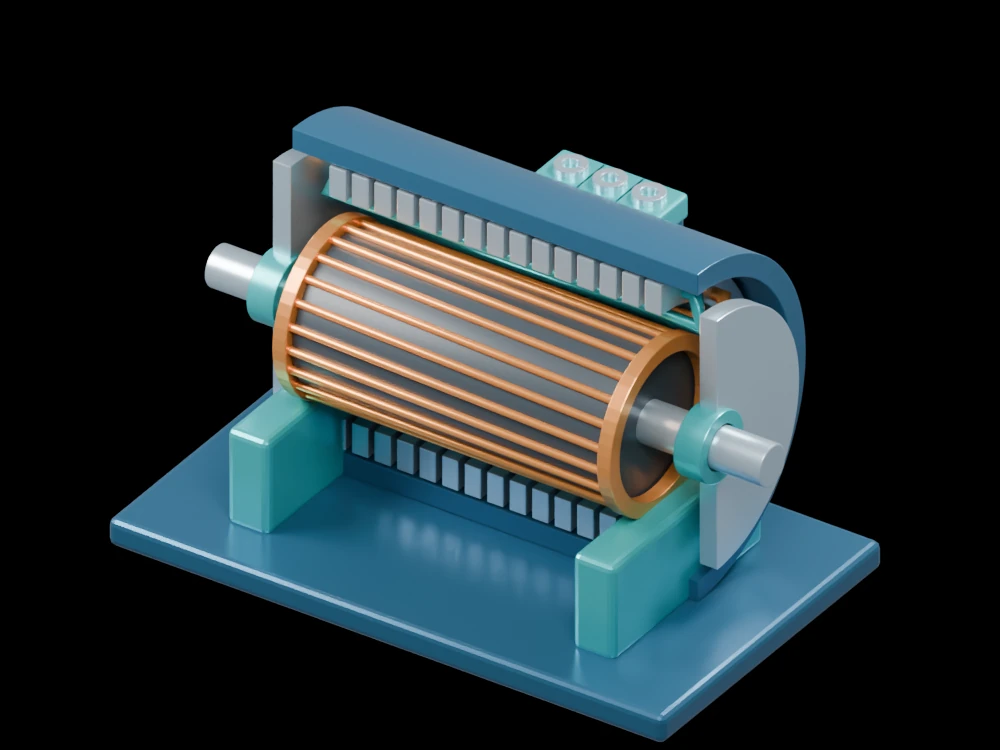
The DC motor model illustrates a conventional rotating drive. The research extends the discussion to transmission control at an entirely different scale, rather than improving the pictured commutator. Current-driven molecular rotation provides a useful comparison between an external magnetic drive and an electrically driven molecular junction.
Explore the Brushed DC motor model and its description, or read our earlier device-focused research explanation.
Primary citation: Mouhong Lin, Jung-uk Lee, Youngjoo Kim et al.. A magnetically powered nanomachine with a DNA clutch. Nature Nanotechnology (2024). 10.1038/s41565-023-01599-6.
Related articles
 Electric current drives a molecular rotor and changes its conductance
 Light drives microscopic gear trains through patterned metasurfacesChanging a motor's magnetic geometry tackles a narrow noise peakMicroscopy reveals which internal features hold a permanent magnet’s directionFriction consolidates brittle magnetic powders in a single processing step
 A camera learns the motion map needed to control very different robotsA new representation makes changing robot contacts easier to predict
 Dense liquid-metal coils combine soft actuation, sensing and communicationElastic electromagnetic mechanisms give small robots muscle-like motion
 An engineered environment changes a microscopic engine’s power–efficiency trade-offNanotextured surfaces help graphite maintain an extremely low-friction contactProjected light assembles and drives reconfigurable microscopic machinesLiquid-metal networks turn a flat elastomer into programmable 3D surfacesMagnetic measurements expose early fatigue changes in tested metalsChanging the character of noise shifts a microscopic engine’s best operating speedRobots learn a predictive body model by watching their own movementsA robot can prevent slipping by changing its path instead of only squeezing harderSoft robots steer their shape by combining local electromagnetic vectorsA soft robot arm stays bendable while transmitting continuous torqueSwitching between unstable modes can stabilise a mechanical oscillator
 An accordion-inspired pump recreates complex flow waveformsA stretchable fibre becomes a pump that can be woven into clothingA soft pump runs on energy collected by a triboelectric generatorA soft pump moves liquid without a rotating impellerGearbox vibrations reveal clues to efficiency during operationA configurable joint reveals how small gaps turn motion into impactsA redesigned magnetic path cuts opening time in a solenoid study
 A rotating magnetic field steers crystallisation toward finer soft magnetsAn alloy becomes mechanically strong while remaining magnetically softTiny manufacturing deformations can disturb the magnetic structure of motor steelNanoprecipitates push ductile soft magnets toward two-gigapascal strength
Explore the models
Sources and further reading
- A magnetically powered nanomachine with a DNA clutch Published 7 Feb 2024