

Power transmission · Research insights
A soft robot arm stays bendable while transmitting continuous torque
Science Robotics demonstrates patterned mechanical joints that bend readily but resist twisting, allowing a soft arm to turn objects.
Study published: 19 March 2025 · Science Robotics. Original research commentary by NPT Research.
A compliant arm can move safely around an imperfectly aligned object, but the same flexibility makes it difficult to deliver sustained twisting force. Researchers separated these requirements by designing structures that respond differently to bending and torsion.
Latest breakthrough
The team created a soft arm using paired mechanical metamaterials acting as compliant constant-velocity joints. The joints were up to 52 times stiffer in torsion than bending and could bend up to 45°. Demonstrations included turning valves, fastening bolts and installing light bulbs.
Read the original study: Bridging hard and soft: Mechanical metamaterials enable rigid torque transmission in soft robots.
How the study worked
Mechanical design established the directional stiffness, and trajectory measurements evaluated repeatability. A neural network learned the inverse kinematics used to command the arm. The task demonstrations tested whether torque transmission and passive compliance could work together during object interaction.
The idea in everyday terms
A flexible screwdriver shaft can bend while carrying a turning action. The research pursues a related functional separation through patterned structures rather than simply choosing a softer material. The important idea is that flexibility need not be identical in every direction or under every type of load.
Why it matters
Combining compliance with useful torque could broaden the tasks performed by soft robotic systems. It complements control strategies that adjust motion: one approach changes the hardware response, while the other changes the commanded behaviour. Both address contact with imperfect real-world conditions.
What the evidence does not establish
The reported tasks and stiffness ratio belong to the tested arm and conditions. They do not establish universal safety around people or unrestricted payload capacity. Fatigue, control limits, tooling and application-specific hazards remain part of deploying a manipulator.
Explore the device
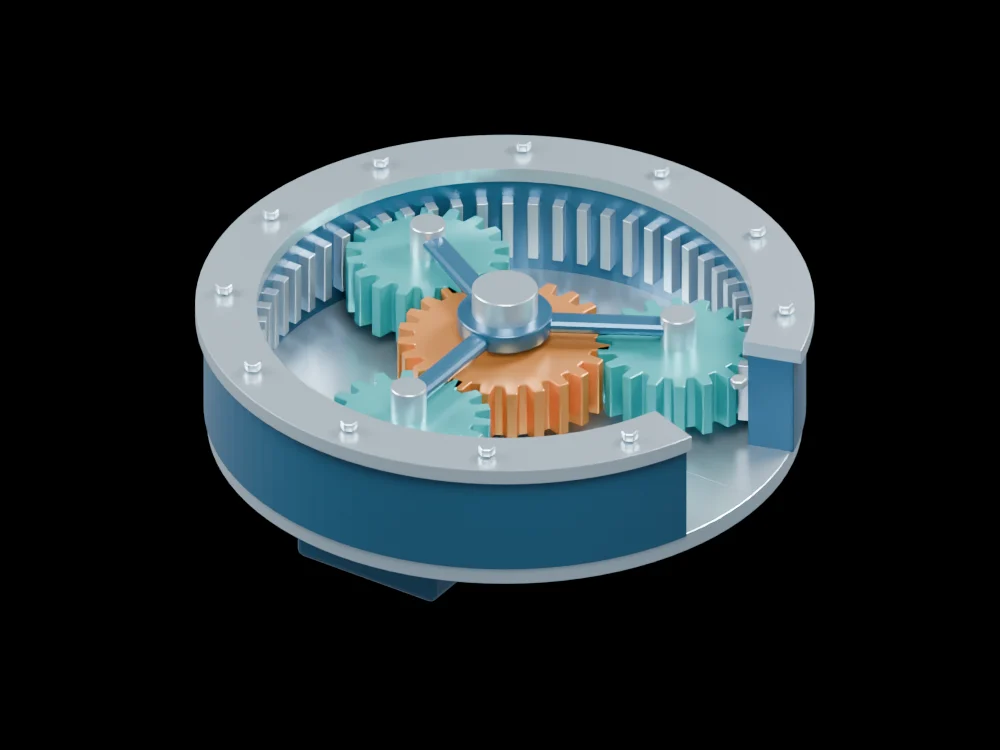
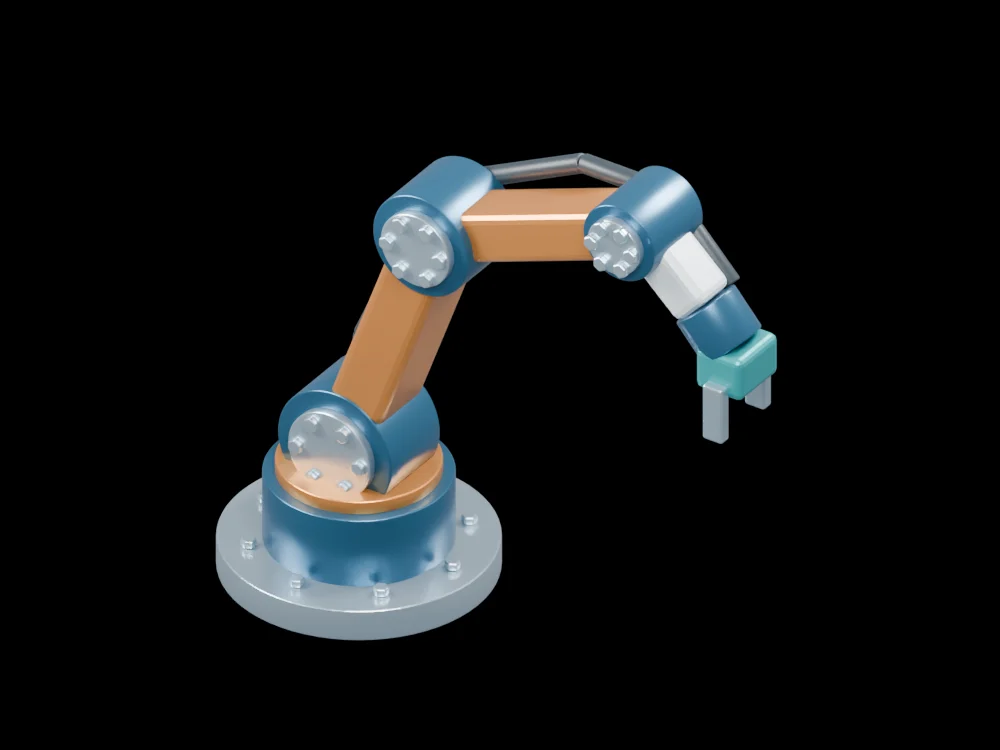
Use the planetary gearbox and robotic-arm models to follow how torque moves from a drive to a task. This paper changes the transmission path through compliant joints rather than adding a new planetary gear set. Optically driven gear trains provide a contrasting example of engineering the same general power-transfer function at another scale.
Explore the Planetary gearbox model and its description, or read our earlier device-focused research explanation.
Primary citation: Molly Carton, Jakub F. Kowalewski, Jiani Guo et al.. Bridging hard and soft: Mechanical metamaterials enable rigid torque transmission in soft robots. Science Robotics (2025). 10.1126/scirobotics.ads0548.
Related articles
 Light drives microscopic gear trains through patterned metasurfaces
 A robot can prevent slipping by changing its path instead of only squeezing harderGearbox vibrations reveal clues to efficiency during operationNanotextured surfaces help graphite maintain an extremely low-friction contactProjected light assembles and drives reconfigurable microscopic machinesA camera learns the motion map needed to control very different robotsA new representation makes changing robot contacts easier to predict
 Dense liquid-metal coils combine soft actuation, sensing and communication
 A DNA clutch lets a magnetic nanomotor engage and disengage its rotorElastic electromagnetic mechanisms give small robots muscle-like motionElectric current drives a molecular rotor and changes its conductance
 An engineered environment changes a microscopic engine’s power–efficiency trade-offLiquid-metal networks turn a flat elastomer into programmable 3D surfacesMagnetic measurements expose early fatigue changes in tested metalsMicroscopy reveals which internal features hold a permanent magnet’s directionChanging the character of noise shifts a microscopic engine’s best operating speedRobots learn a predictive body model by watching their own movementsSoft robots steer their shape by combining local electromagnetic vectorsFriction consolidates brittle magnetic powders in a single processing stepSwitching between unstable modes can stabilise a mechanical oscillator
 An accordion-inspired pump recreates complex flow waveformsA stretchable fibre becomes a pump that can be woven into clothingA soft pump runs on energy collected by a triboelectric generatorA soft pump moves liquid without a rotating impellerChanging a motor's magnetic geometry tackles a narrow noise peak
 Correcting encoder signals improves tiny-motion measurementsA modular robot arm succeeds in 91.67% of 240 test trialsA configurable joint reveals how small gaps turn motion into impacts