

Electrical machines · Research insights
Electric current drives a molecular rotor and changes its conductance
A Nature study links voltage-controlled rotation of a helicene molecule to an increase in electrical conductance at a molecular junction.
Study published: 22 October 2026 · Nature. Original research commentary by NPT Research.
At the scale of an ordinary motor, electrical current produces mechanical rotation through a deliberately arranged magnetic field. At molecular scale, a different coupling can emerge. Researchers studied a helical molecule whose motion and electrical conductance influence one another.
Latest breakthrough
The team suspended a helicene molecule between electrode tips and observed voltage-driven cyclic motion with a directional preference reversible by changing voltage polarity. Above a threshold, the moving junction conducted more strongly. Stretching or compressing the molecule changed the onset of that conductance enhancement.
Read the original study: Current-Driven Molecular Machine with Rotation-Enhanced Conductance.
How the study worked
Measurements of the molecular junction were compared with calculations of current-induced forces and molecular motion. The analysis supports a transition from stepwise to continuous rotation, allowing access to more conductive configurations. The experiment therefore links a mechanical degree of freedom to a measurable electrical response.
The idea in everyday terms
A familiar motor converts electricity into rotation; a generator connects motion back to electrical behaviour. This molecular system also couples motion and electricity, but through a very different microscopic mechanism. The comparison is useful for identifying an energy-conversion relationship, not for imagining a miniature copper-wound motor hidden inside the molecule.
Why it matters
The work expands how researchers can design active molecular components. Controllable motion could become a functional part of a device rather than an unwanted fluctuation. A DNA-controlled nanomotor clutch tackles another machine function at small scale: deciding when motion reaches an output element.
What the evidence does not establish
The demonstration is a molecular-junction experiment. It does not establish a durable, high-torque motor for ordinary machinery, nor does enhanced conductance mean energy is created. Device lifetime, integration and useful mechanical loading remain separate questions.
Explore the device
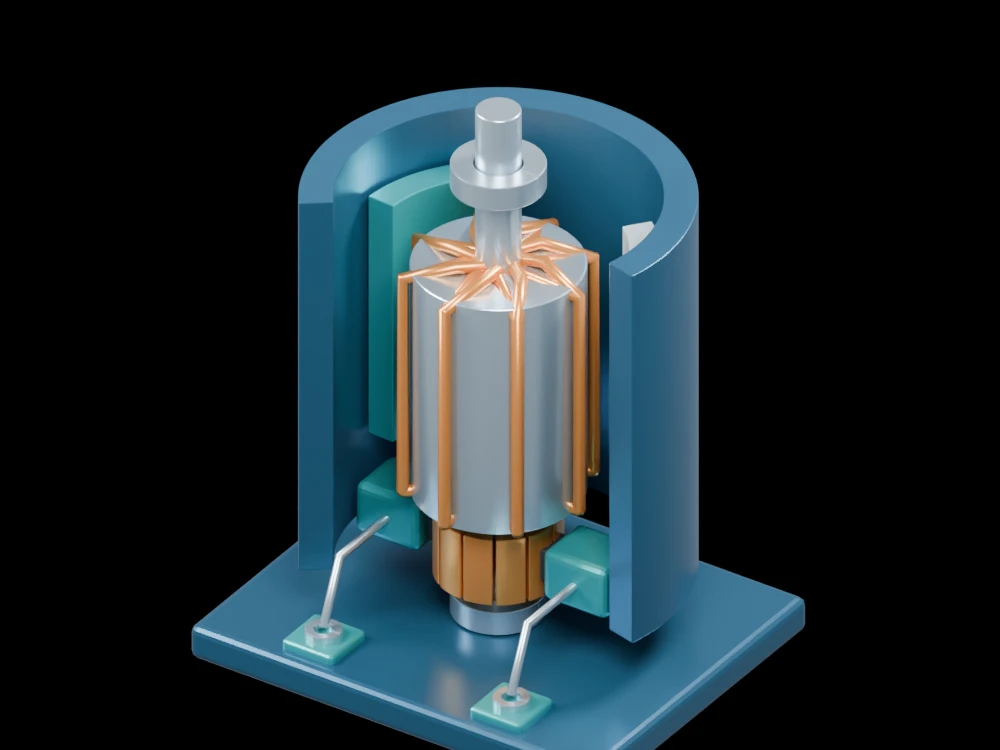
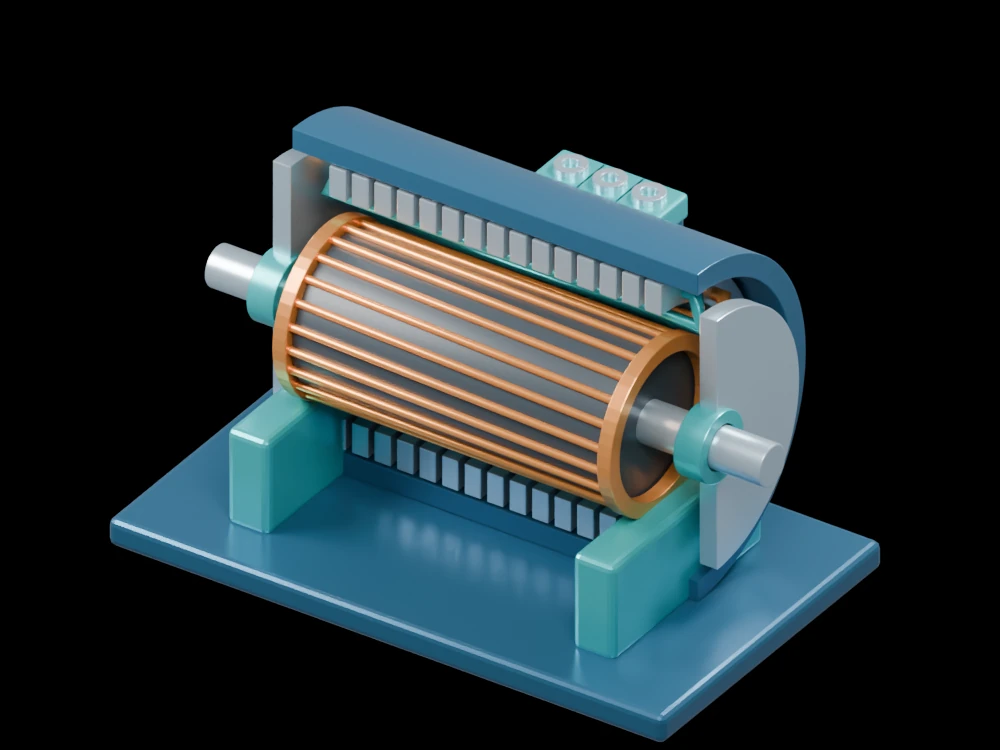
The brushed DC motor model shows a rotor, magnetic field and switching contacts. Use it to identify the general functions of drive, rotation and control, then recognise that the molecular study implements them differently. New processing routes for bulk magnets address the materials needed at the conventional motor scale.
Explore the Brushed DC motor model and its description, or read our earlier device-focused research explanation.
Primary citation: Anil Kumar Singh, León Martin, Matea Sršen et al.. Current-Driven Molecular Machine with Rotation-Enhanced Conductance. Nature (2026). 10.1038/s41586-026-11312-x.
Related articles
 A DNA clutch lets a magnetic nanomotor engage and disengage its rotorFriction consolidates brittle magnetic powders in a single processing stepChanging a motor's magnetic geometry tackles a narrow noise peakMicroscopy reveals which internal features hold a permanent magnet’s direction
 A camera learns the motion map needed to control very different robotsA new representation makes changing robot contacts easier to predict
 Dense liquid-metal coils combine soft actuation, sensing and communicationElastic electromagnetic mechanisms give small robots muscle-like motion
 An engineered environment changes a microscopic engine’s power–efficiency trade-off
 Nanotextured surfaces help graphite maintain an extremely low-friction contactProjected light assembles and drives reconfigurable microscopic machinesLiquid-metal networks turn a flat elastomer into programmable 3D surfacesMagnetic measurements expose early fatigue changes in tested metalsLight drives microscopic gear trains through patterned metasurfacesChanging the character of noise shifts a microscopic engine’s best operating speedRobots learn a predictive body model by watching their own movementsA robot can prevent slipping by changing its path instead of only squeezing harderSoft robots steer their shape by combining local electromagnetic vectorsA soft robot arm stays bendable while transmitting continuous torqueSwitching between unstable modes can stabilise a mechanical oscillator
 An accordion-inspired pump recreates complex flow waveformsA stretchable fibre becomes a pump that can be woven into clothingA soft pump runs on energy collected by a triboelectric generatorA soft pump moves liquid without a rotating impellerGearbox vibrations reveal clues to efficiency during operationA configurable joint reveals how small gaps turn motion into impactsA redesigned magnetic path cuts opening time in a solenoid study
 A rotating magnetic field steers crystallisation toward finer soft magnetsAn alloy becomes mechanically strong while remaining magnetically softTiny manufacturing deformations can disturb the magnetic structure of motor steelNanoprecipitates push ductile soft magnets toward two-gigapascal strength
Explore the models
Sources and further reading
- Current-Driven Molecular Machine with Rotation-Enhanced Conductance Published 22 Oct 2026