

Electromagnetics · Research insights
Liquid-metal networks turn a flat elastomer into programmable 3D surfaces
Researchers combine electromagnetic actuation, liquid-metal channels and modelling to create reversible, shape-programmable surfaces.
Study published: 23 September 2022 · Nature Communications. Original research commentary by NPT Research.
A solenoid usually moves one plunger along one axis. A shape-changing surface needs force distributed across many locations. Researchers used liquid-metal networks embedded in elastomer to turn electrical control into coordinated three-dimensional deformation.
Latest breakthrough
The study demonstrated fast, reversible transformations from a flat configuration into complex continuous surfaces. Electromagnetic actuation supplied the motion, while a liquid–solid transition in the metal enabled shape fixation and reprogramming. A dynamic display demonstration illustrated one possible use of the morphable surface.
Read the original study: Soft shape-programmable surfaces by fast electromagnetic actuation of liquid metal networks.
How the study worked
The researchers combined material fabrication with multiphysics modelling and three-dimensional imaging. Modelling connected the electrical drive and magnetic forces to the elastic response. Imaging checked the resulting shape, allowing the system to move among target configurations rather than simply deform unpredictably.
The idea in everyday terms
A tent takes shape when several tensioned lines act on a flexible sheet. Here the force distribution is electrically controlled through embedded conducting paths. The analogy explains coordinated deformation, but the real system relies on electromagnetic forces and elastic mechanics rather than ropes pulling at a few corners.
Why it matters
Distributed actuation could expand the forms of interactive surfaces and soft machines. It develops a different use of conductors from high-density liquid-metal coils, where the aim is to concentrate and integrate electromagnetic functions.
What the evidence does not establish
The reported surface and display demonstrations do not establish arbitrary shape control at any size or load. Heating, magnetic-field conditions, material fatigue and shape accuracy matter. Phase-change fixation also has a thermal cost that should not be omitted from a complete system analysis.
Explore the device
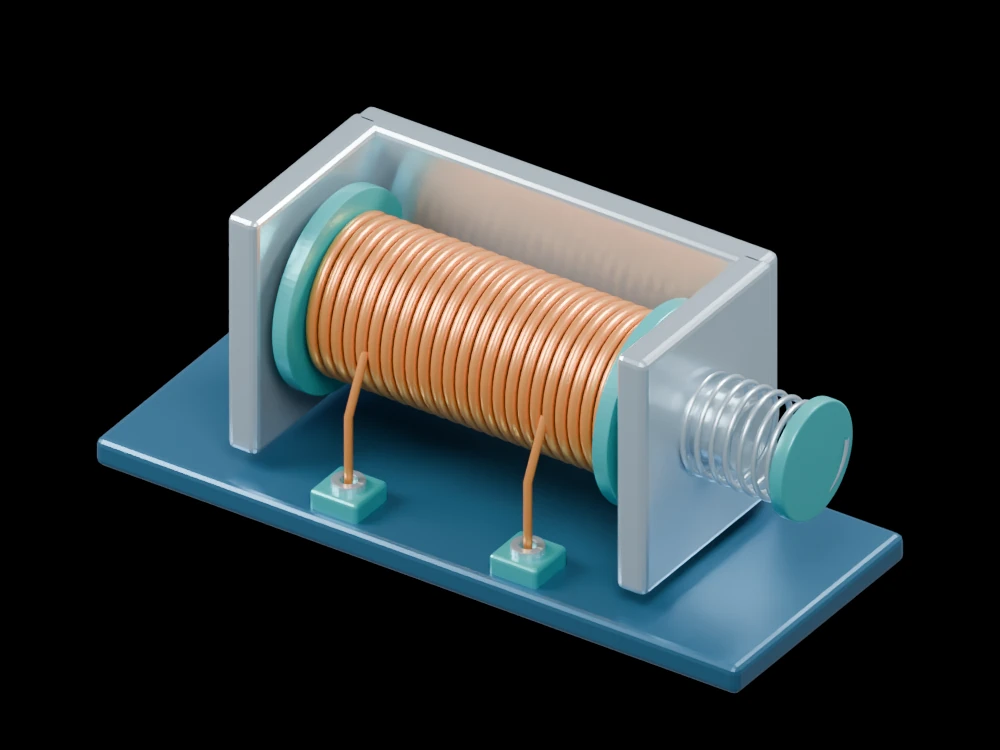
The solenoid model introduces current-driven magnetic actuation in a familiar rigid geometry. This study distributes that force across a compliant network. Self-vectoring soft robots take the next conceptual step of changing how multiple local force contributions combine.
Explore the Solenoid actuator model and its description, or read our earlier device-focused research explanation.
Primary citation: Xinchen Ni, Haiwen Luan, Jin-Tae Kim et al.. Soft shape-programmable surfaces by fast electromagnetic actuation of liquid metal networks. Nature Communications (2022). 10.1038/s41467-022-31092-y.
Related articles
 Dense liquid-metal coils combine soft actuation, sensing and communicationSoft robots steer their shape by combining local electromagnetic vectorsA redesigned magnetic path cuts opening time in a solenoid studyElastic electromagnetic mechanisms give small robots muscle-like motion
 A camera learns the motion map needed to control very different robotsA new representation makes changing robot contacts easier to predict
 A DNA clutch lets a magnetic nanomotor engage and disengage its rotorElectric current drives a molecular rotor and changes its conductance
 Nanotextured surfaces help graphite maintain an extremely low-friction contactProjected light assembles and drives reconfigurable microscopic machinesMicroscopy reveals which internal features hold a permanent magnet’s directionLight drives microscopic gear trains through patterned metasurfacesRobots learn a predictive body model by watching their own movementsA robot can prevent slipping by changing its path instead of only squeezing harderFriction consolidates brittle magnetic powders in a single processing stepA soft robot arm stays bendable while transmitting continuous torque
 An accordion-inspired pump recreates complex flow waveforms
 An engineered environment changes a microscopic engine’s power–efficiency trade-offA stretchable fibre becomes a pump that can be woven into clothingMagnetic measurements expose early fatigue changes in tested metalsChanging the character of noise shifts a microscopic engine’s best operating speedA soft pump runs on energy collected by a triboelectric generatorA soft pump moves liquid without a rotating impellerSwitching between unstable modes can stabilise a mechanical oscillatorChanging a motor's magnetic geometry tackles a narrow noise peak
 Correcting encoder signals improves tiny-motion measurementsA modular robot arm succeeds in 91.67% of 240 test trialsA configurable joint reveals how small gaps turn motion into impacts
 A magnetic composite tackles eddy-current and hysteresis losses togetherNarrow magnetic domains help an iron-rich ribbon waste less energyMagnetic-domain motion can send energy into the crystal latticeEngineered interfaces let magnetic particles couple without the usual loss penalty
Explore the models
Sources and further reading
- Soft shape-programmable surfaces by fast electromagnetic actuation of liquid metal networks Published 23 Sept 2022